
Acha Alama
The jingle.
1″37
The only piece of this campaign you can already hear. Everything else on this page is written and timed; this one is recorded.
0:00

Making Vodacom matter more to young Tanzanians. A response from FH Strategy.
It is the one input that is already abundant. Every operator here has good agencies, adequate budgets and full media access. Vodacom posted ten times in twelve days, in Swahili, with a well-conceived regional challenge, and drew 24,974 plays. The work is not the problem. It is being poured into a system with four holes in it.
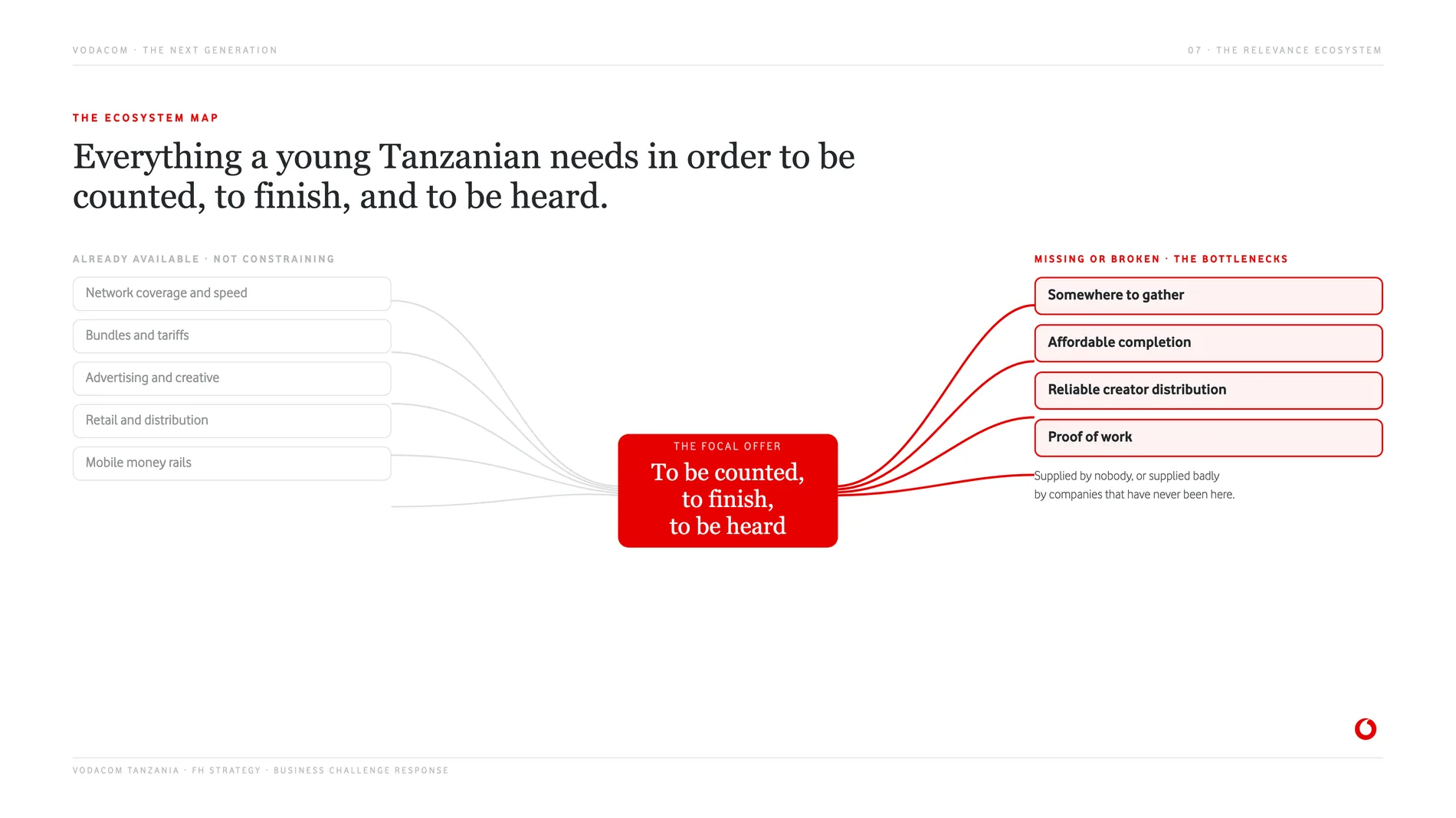
No operator, no platform, no institution. Young Tanzanians hold roll calls in the comments of a film from 2017.
Data sold in fragments, priced so that finishing is a decision.
Foreign platforms, allocating reach by lottery. Followers and reach correlate at minus 0.089.
Three quarters earn informally, with no payslip, no reference and no record.

Says: Prove you were here.
Builds: the record. Ally: employers, training providers, banks.

Says: Let them finish.
Builds: the completion guarantee and the tariff behind it.
Says: Make sure they are heard.
Builds: the distribution layer, then open it to creators.
The order matters. Build the missing thing first, then say it. One route runs, not three, and whichever it is, it sits on Nipo, under the Vodacom master brand and Zaidi ya Mtandao. We ask to be judged on comment quality, because that is the difference between being seen and being answered.
Thirteen million people have watched it. Now read the comments.
Family Tears 2B · Mtitu Movies, 2017. Shown as evidence. Not ours.
Twenty-plus of these, spanning 2020 to August 2026, in four different verb forms, all converging on one word: tujuane, let us know one another.
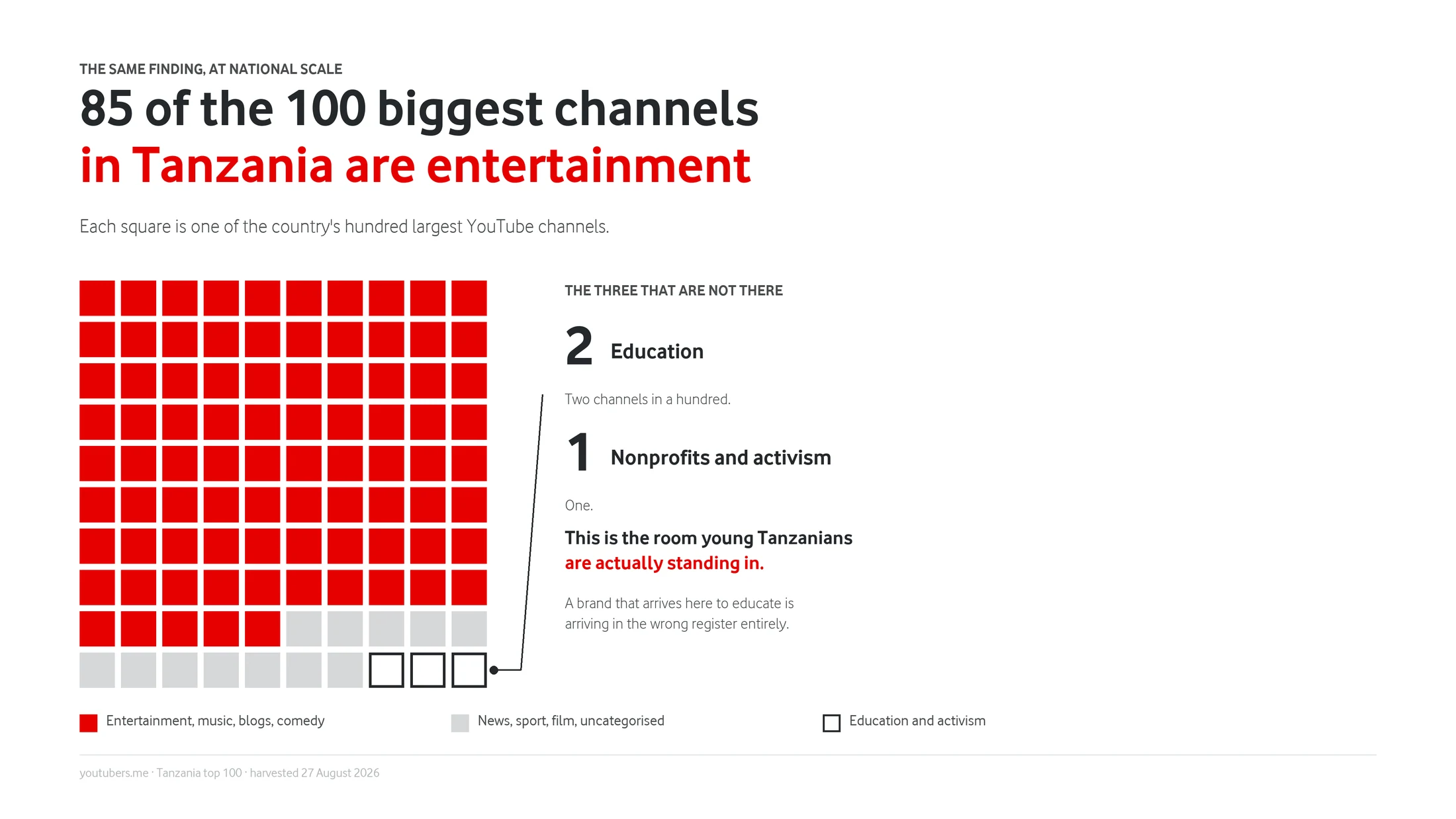
“What you can do to succeed as a youth in Tanzania” has 29 views. The Kijiweni Youth Podcast, made by the Tanzania Youth Coalition, has 35. Nationally, of the hundred largest YouTube channels in the country, Education is two and Nonprofits & Activism is one.
Not a benefit. Not a bundle. Not a discount. The literal function of the business is putting people in the same place at the same time. Yas cannot claim it. Airtel and Halotel cannot buy it.
This is not neglect. Vodacom posted ten times in twelve days, in Swahili, running a regional challenge rotated by zone. The idea is sound. Those posts drew 2,095, then 1,399, then 951 plays. The work is not the problem, it is not being distributed.
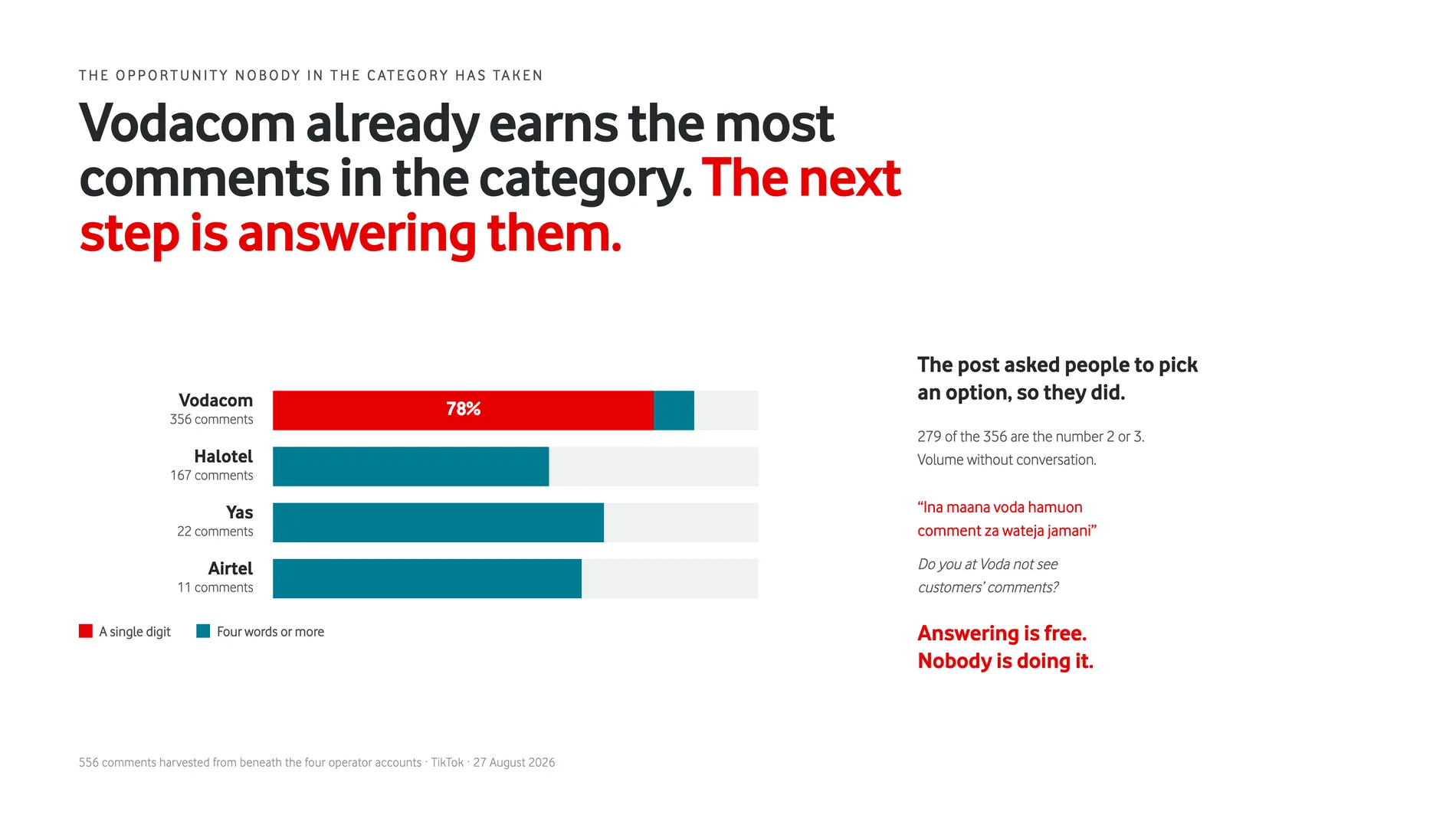
78.4% of Vodacom’s 356 comments are a single digit, because the post asked viewers to pick an option. And underneath it, unanswered: “Ina maana voda hamuon comment za wateja jamani”, does this mean you at Voda do not see customers’ comments?
It is the one input that is already abundant, cheap and universally available. Every operator in Tanzania has excellent agencies, adequate budgets and full media access. Adding more of an abundant input does not relieve a constrained system.
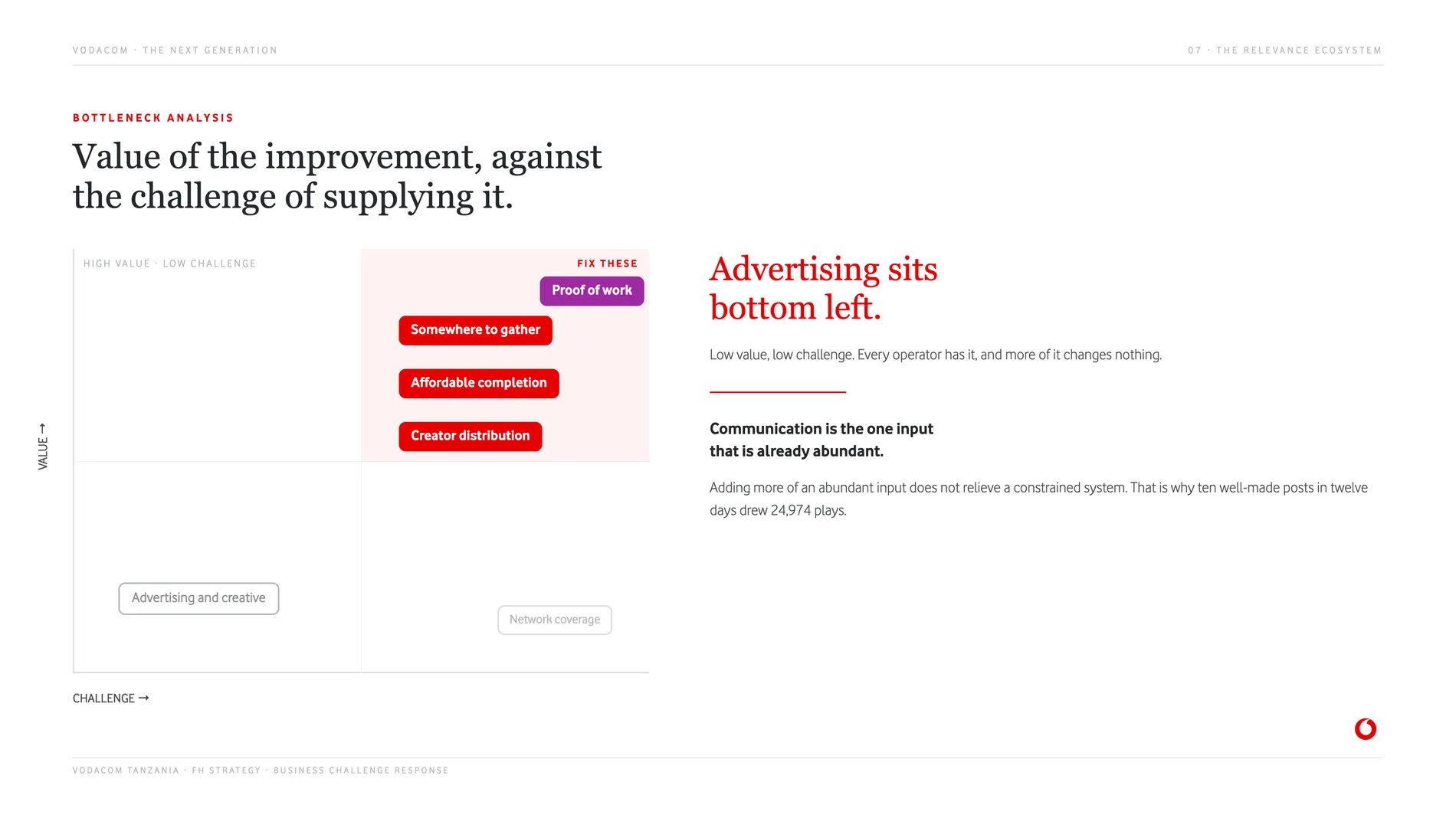
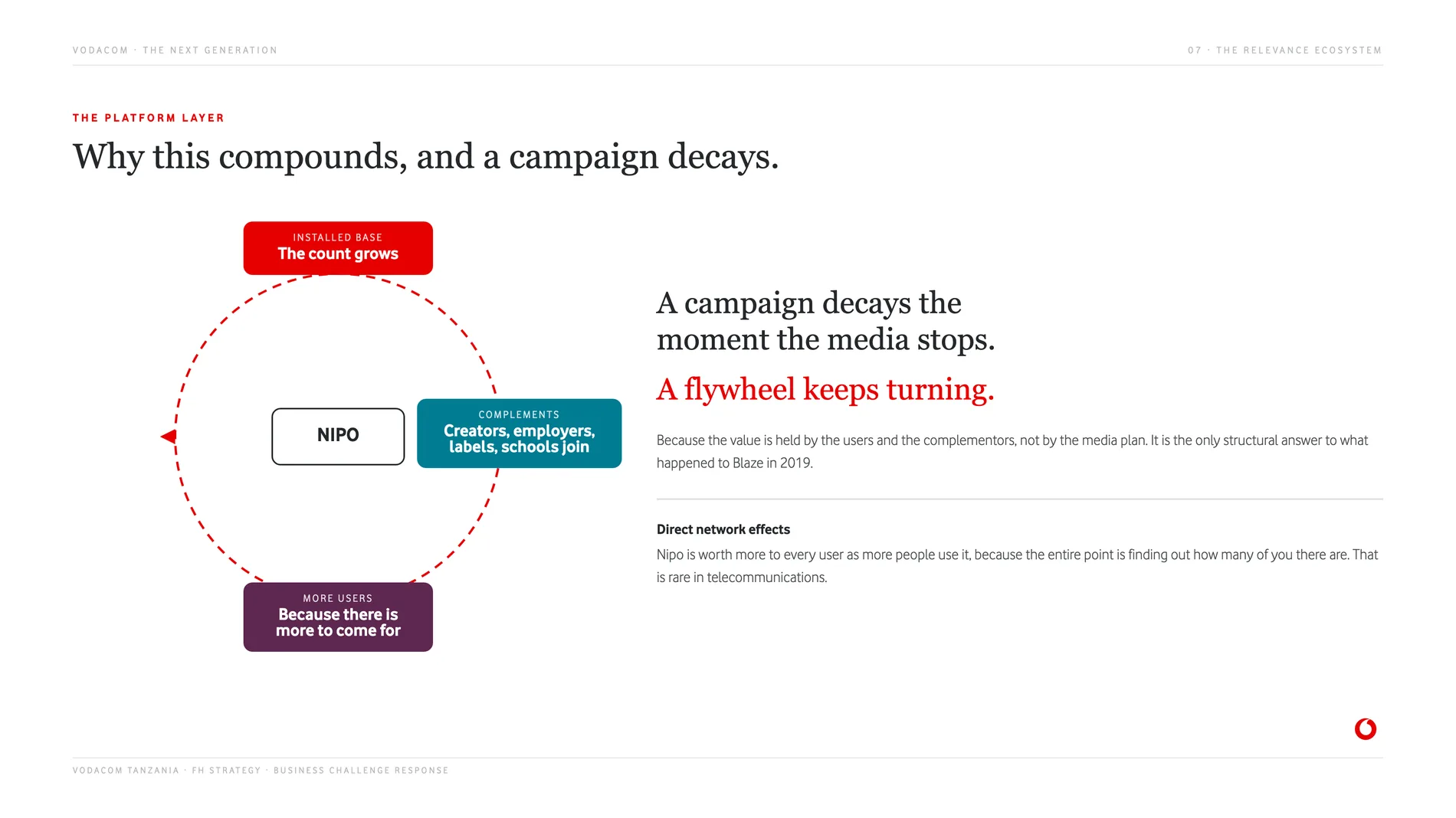
Blaze was never an advertising campaign. 35+ on-ground summits and creation camps. Two BYOB television series. Three campus experience zones. 5m+ youth engaged. It reached Chosen because it relieved bottlenecks, and when it was switched off in 2019, what was lost was the ecosystem, not the advertising.
Everything on this site depends on the answer. A Register card every morning, the Hands twice a week, Co-signs on Thursday, a creator every Friday. That is roughly five hundred original pieces in twelve months. No agency makes that centrally at a price anyone signs, so either there is a machine underneath it or the cadence quietly breaks in month three.
This is the machine, and it is already built. It does not replace the film. It feeds it, fills the fifty weeks between flights, and turns paid media into the thing that points at real stories.
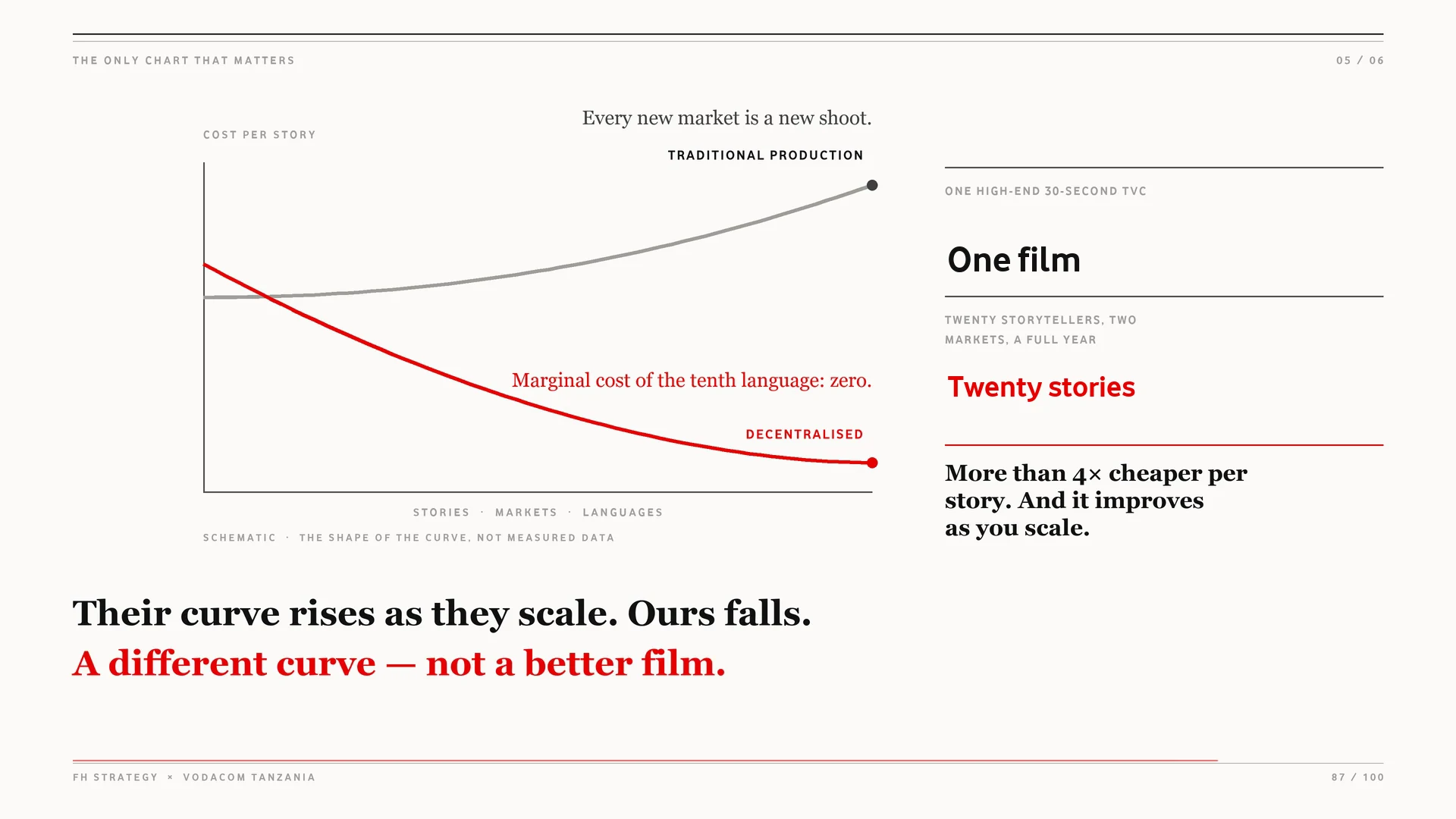
A television production costs more with every market, every language and every re-shoot. A decentralised engine costs less per story with every contributor added, because the cost sits in the system rather than the shoot. Over four times cheaper per story, and it improves as you scale. This is not a cheaper film. It is a different curve.
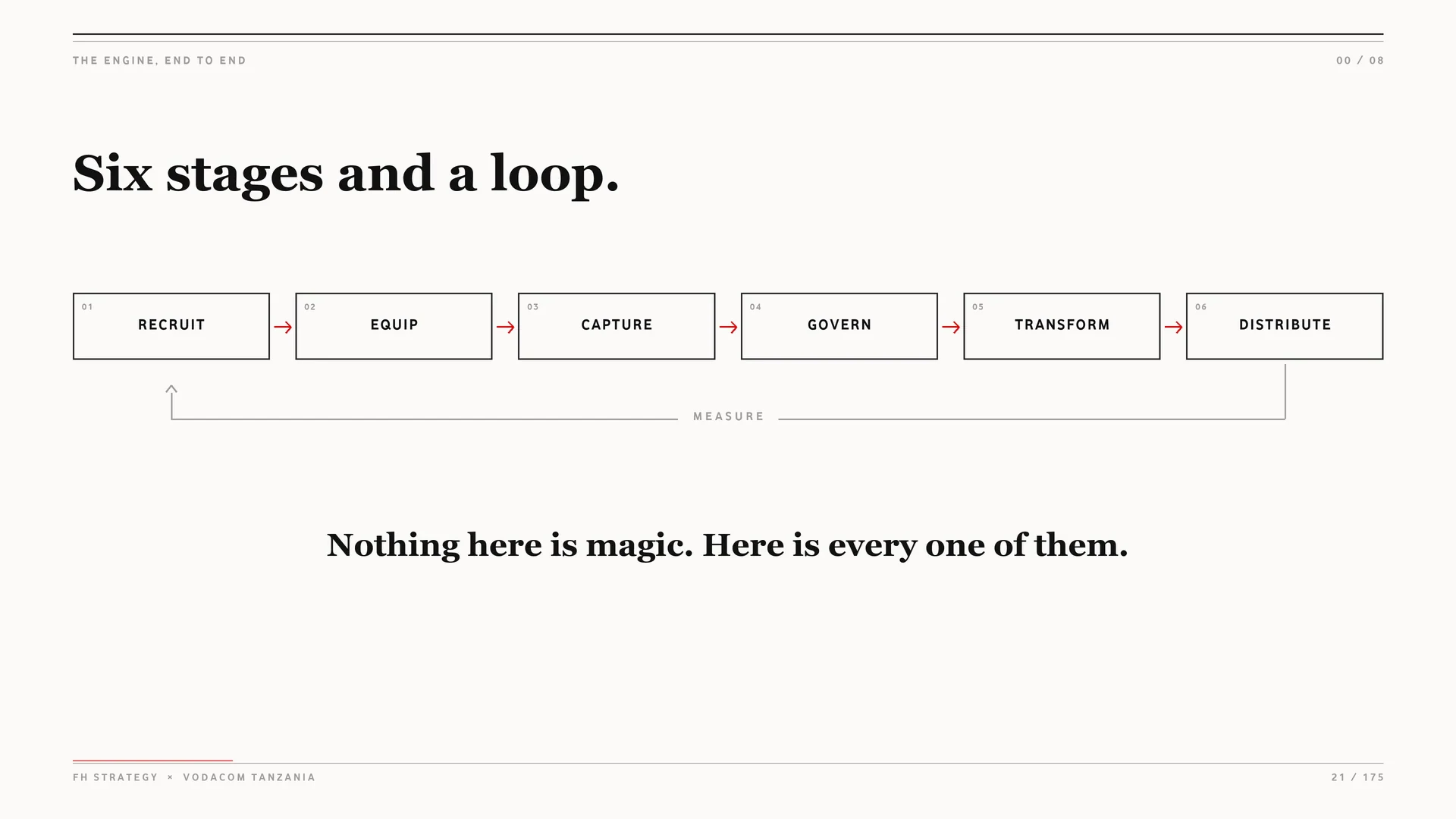
Every decentralised content model in this category has failed in the same place: the pipeline. Contributors file twice and stop, because nothing came back. That is not a communications problem, it is a payment problem, and Vodacom is the one client in Tanzania that can pay for stories in the currency it already prints.
The arbitrage is the whole model: data costs Vodacom wholesale and is worth retail to an eighteen-year-old. No competitor for these stories can match that gap. The reward for telling a network story is more network.
Those are supply-side figures, not the price of the engine. The platform is FH background intellectual property, built before this process and running today for another client. It is licensed separately from the monthly retainer and is not included in it. Vodacom owns everything that comes out of it, every published story, every finished asset and every contributor consent record, in perpetuity. We license the machine underneath.
It is live at zaidi.fhstrategy.com, and there is an offline copy in this pack so it works with no connection in the room. The contributor view, the Vodacom internal view, a live governance gate with working approve and decline, and the Transformation Studio that lets you watch one raw contribution become finished out-of-home, social and radio. The voice capture is the part to look at.
Built and running as a product. Vodacom would be its first live commercial deployment. It was architected for a multi-country African youth programme whose campaign was paused before launch, so we are not claiming it ran, and it sits inside our current Pamoja Malawi assignment for RAES as the capture and evidence layer.
Eleven cuts, playing together, so you can see the pace rather than read about it. The first three are our own work, Safaricom Hook, which we made. The rest are reference only, shown for pace, cutting rhythm and the way a crowd moves away from camera. They are not ours and they are not the campaign. We would shoot our own.
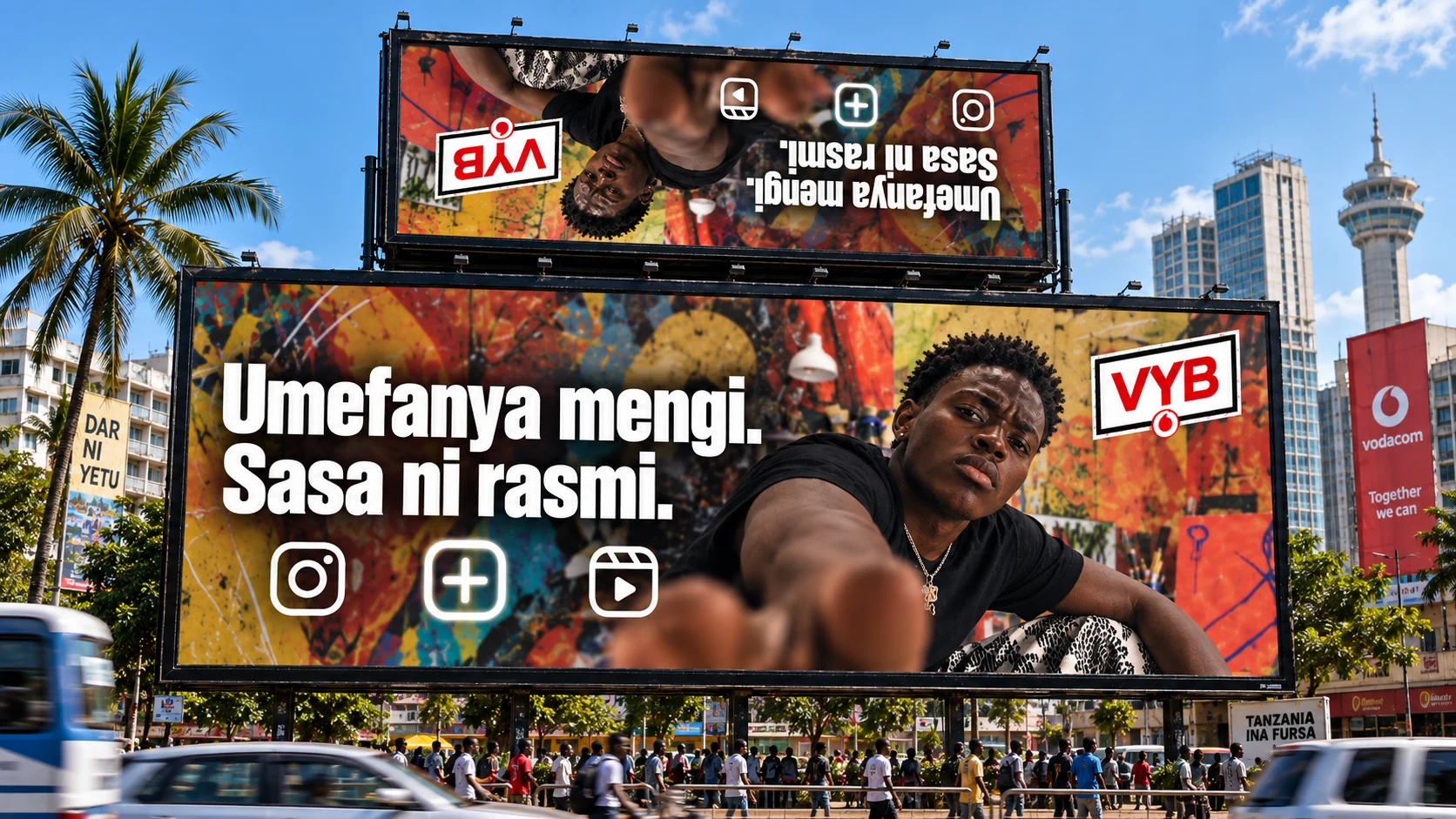
The witness. I existed.
The one who lets you finish. I got to finish.
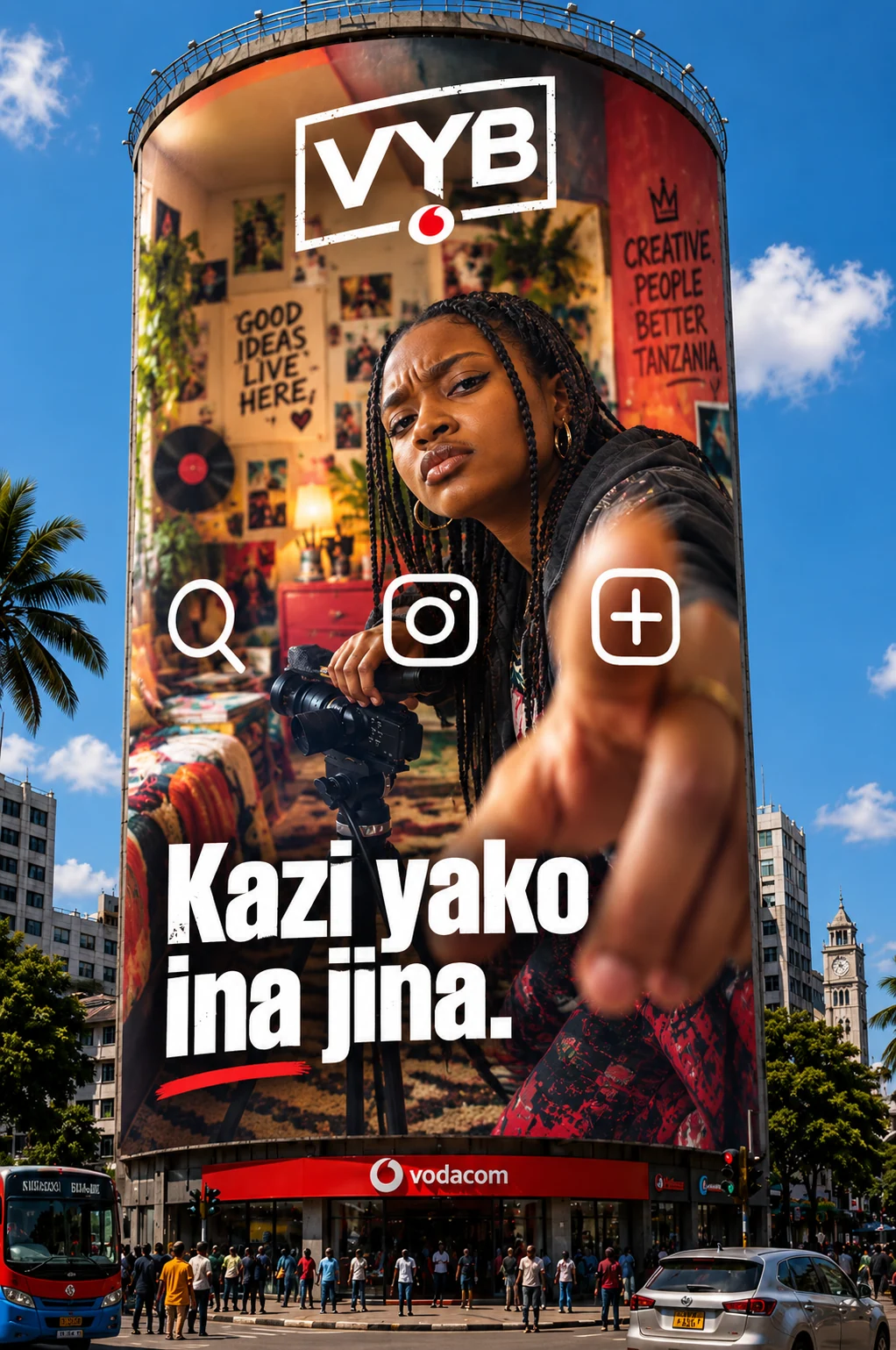
The one who makes sure you are heard. I was heard.
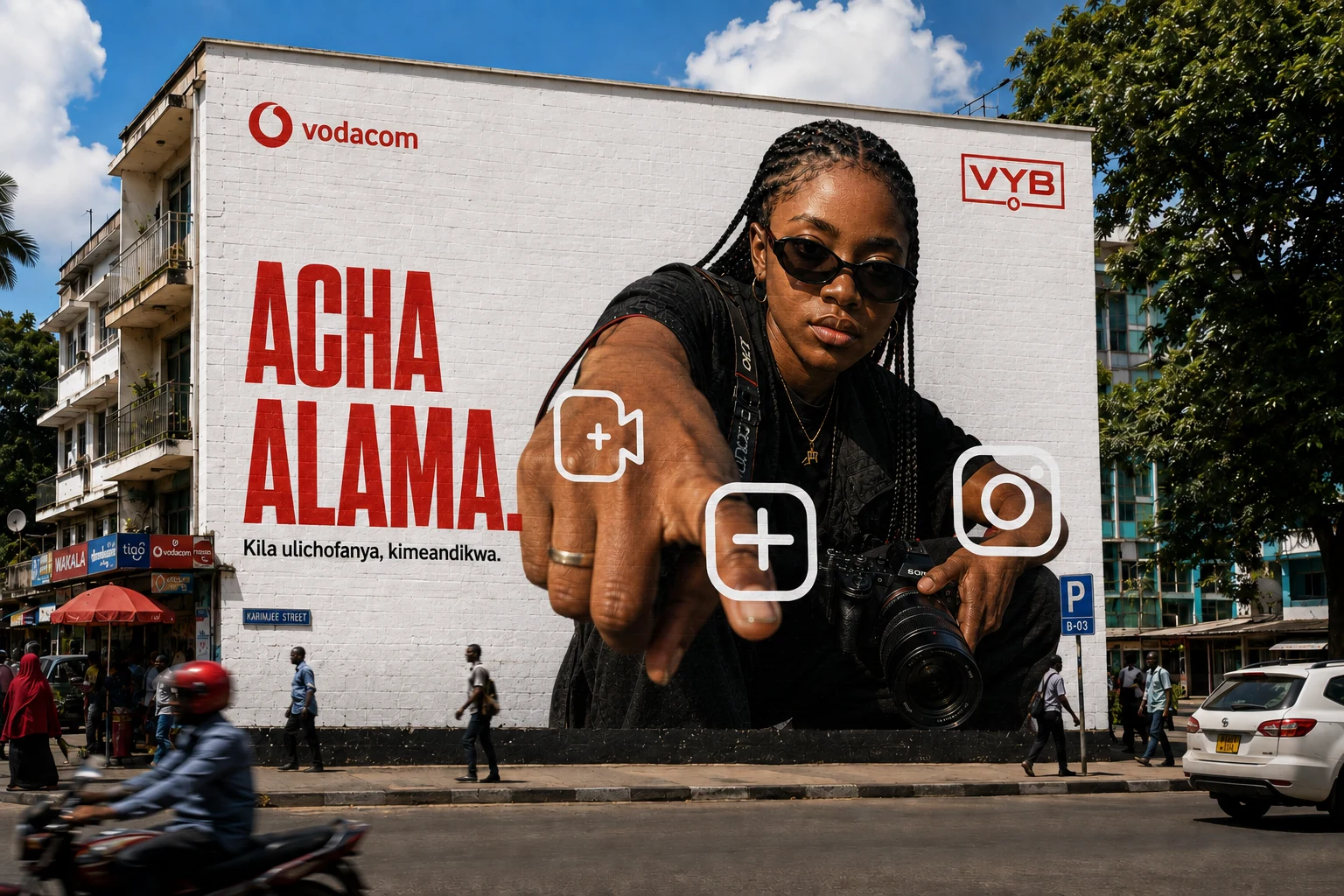
Leave a mark.
Eight hundred thousand of you start looking for work every year. Three hundred and fifty four thousand jobs exist. The rest built their own, and seventy-five per cent earn informally: no payslip, no reference, no record.
Vodacom is the only institution in Tanzania that already holds a record of every young person’s life, and it has only ever used it to bill them. Turn it around. The network stops being a meter and becomes a witness.

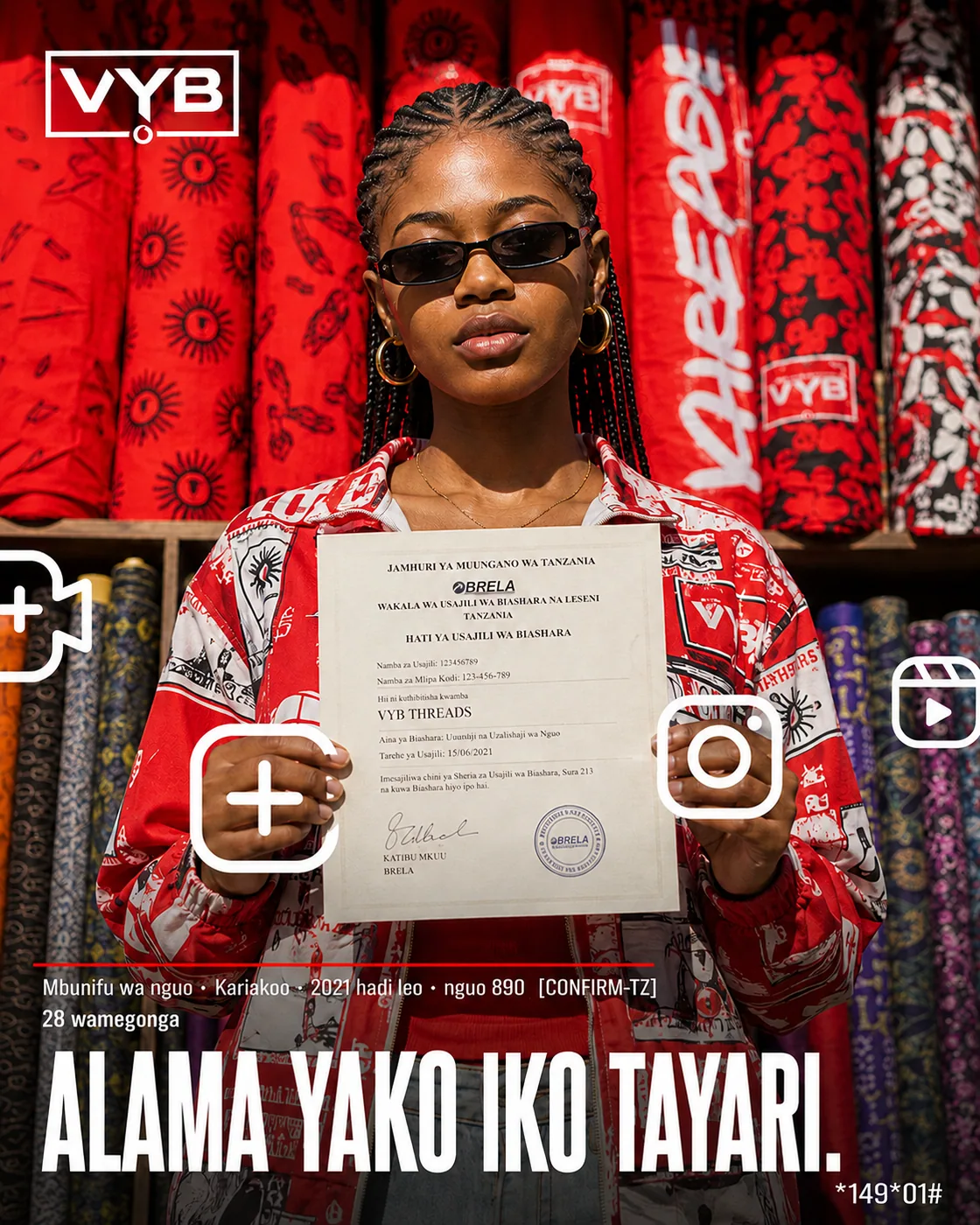
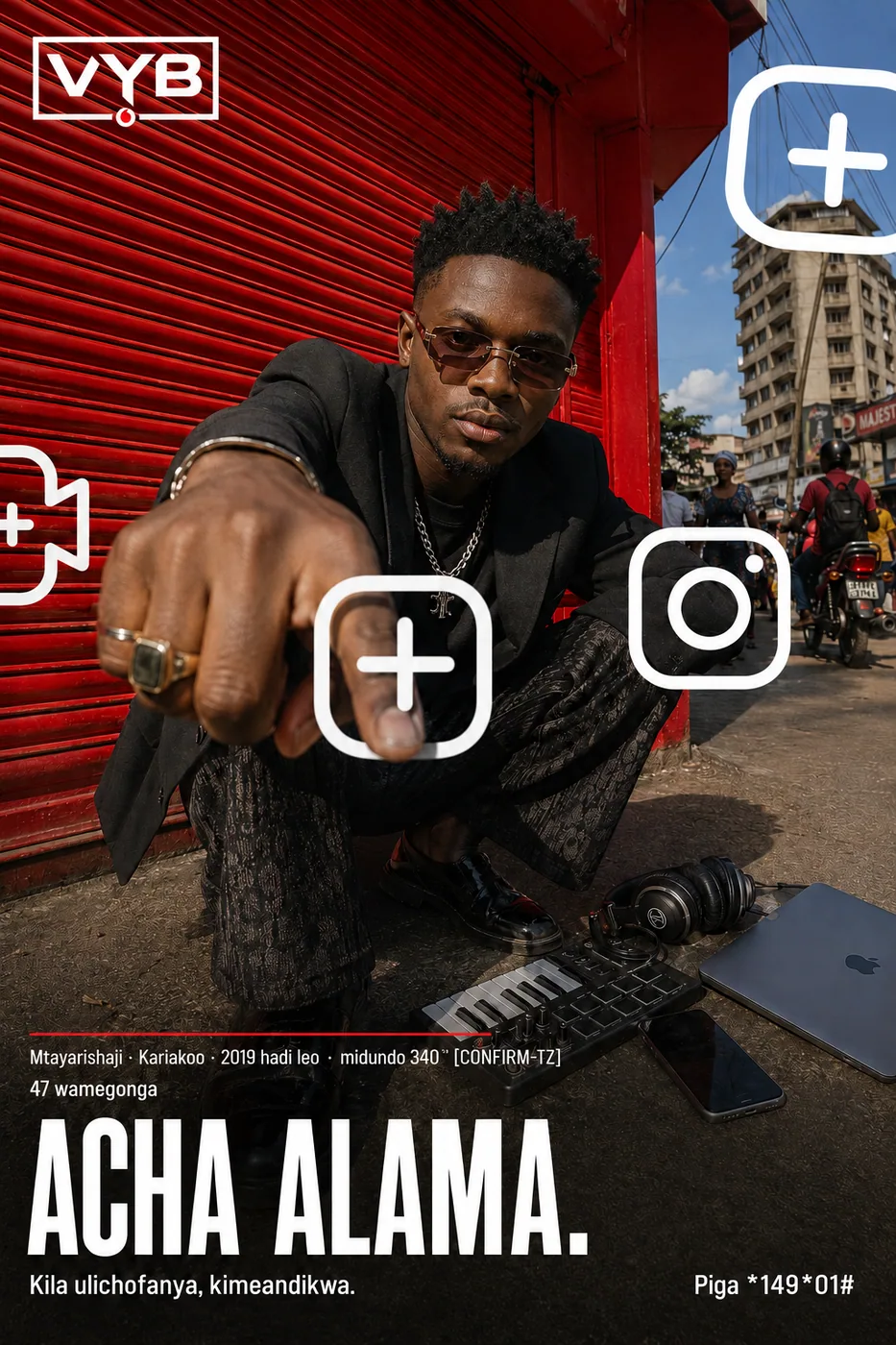

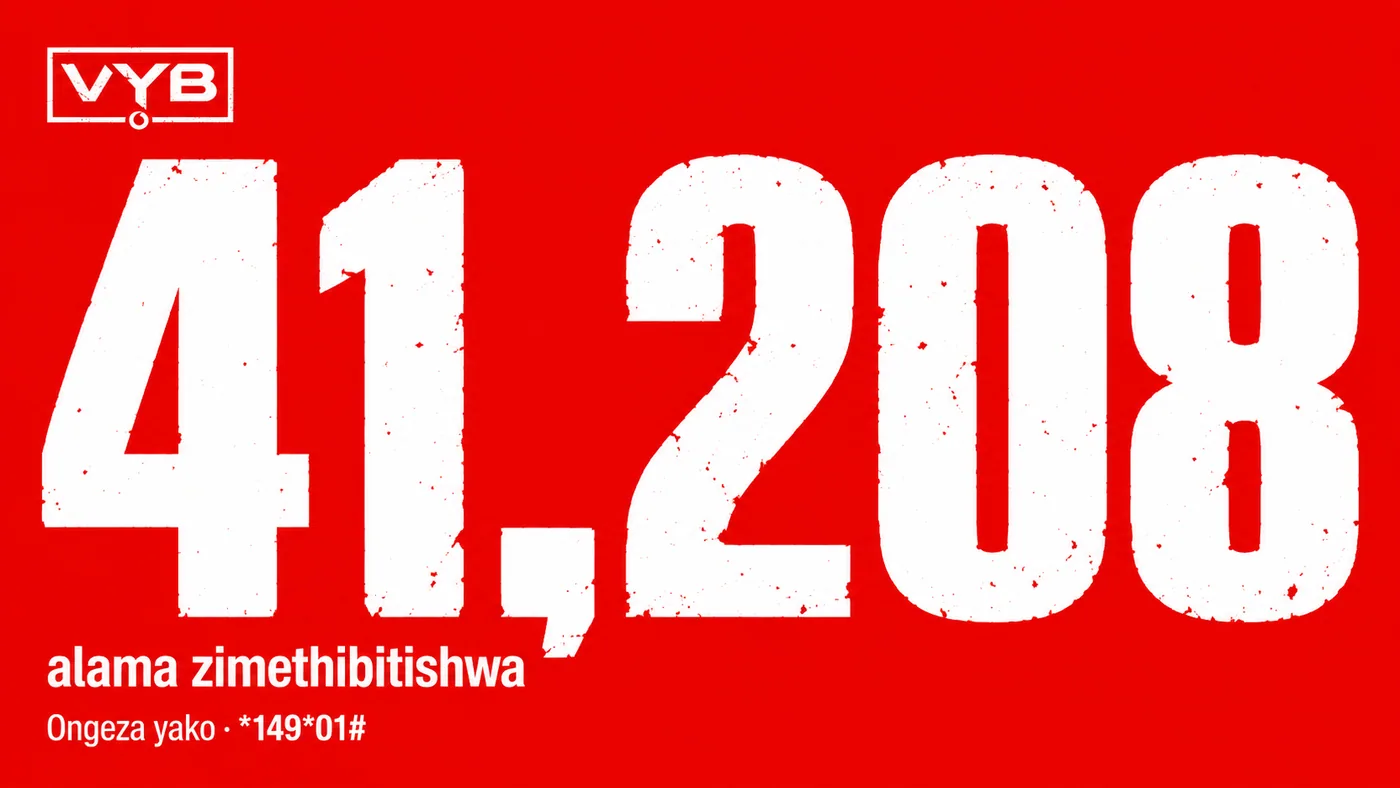




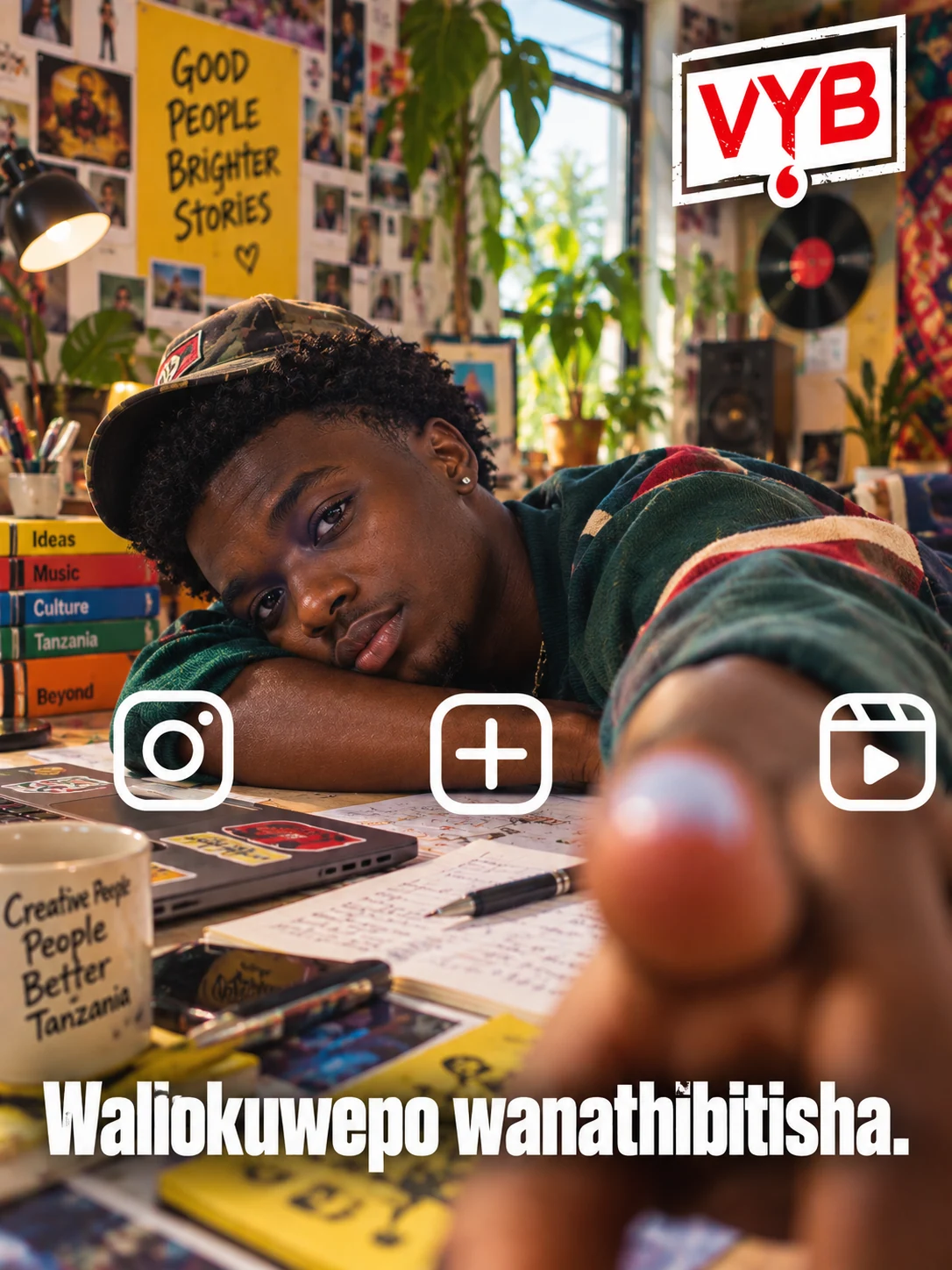

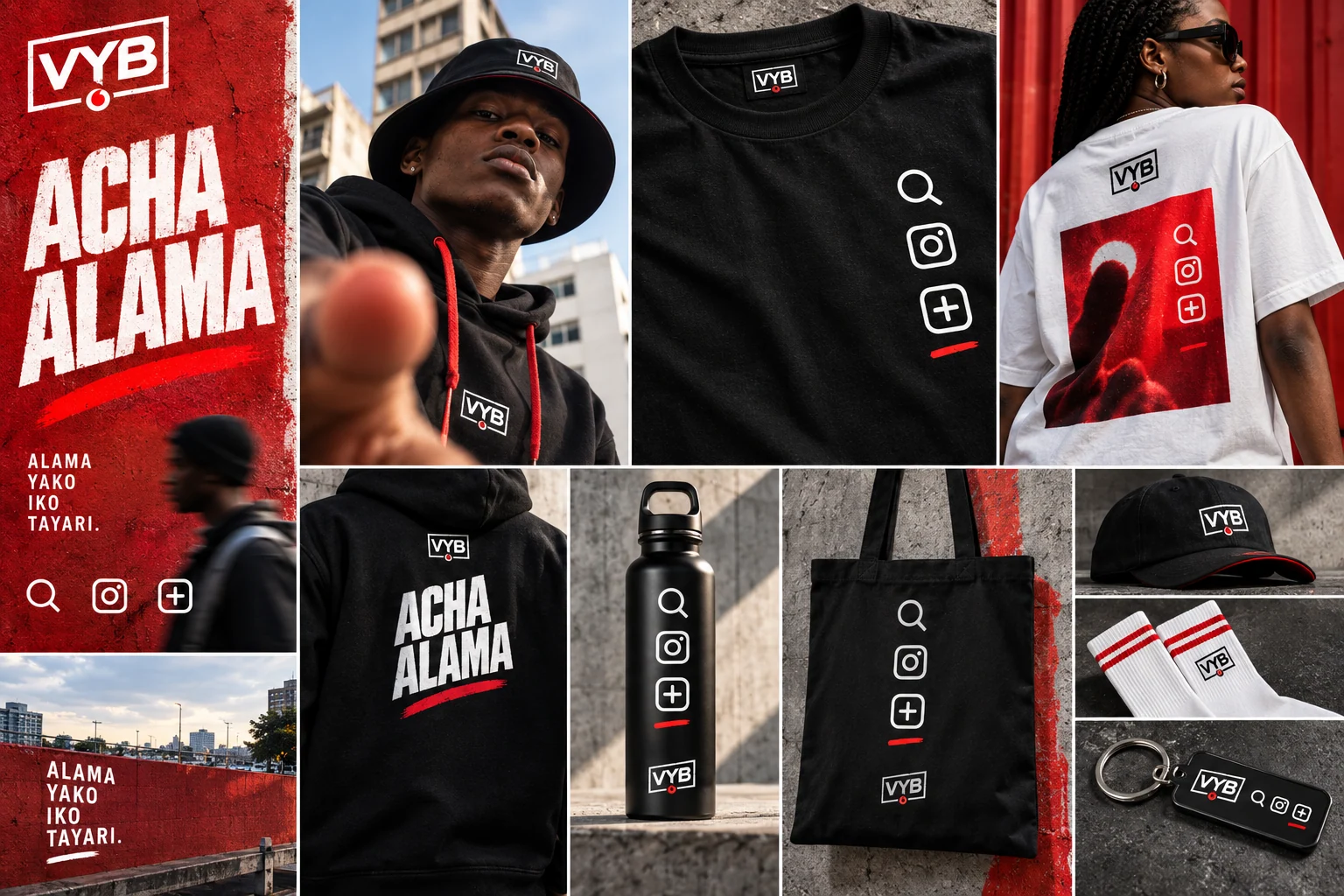
Not branded giveaways. A range in the campaign’s own language that a young Tanzanian would put on without being paid to. The test is whether it resells.
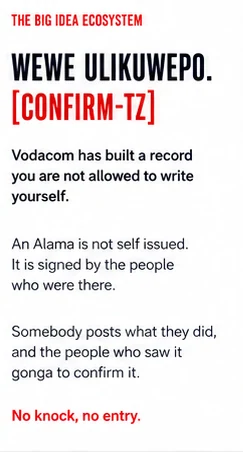
Somebody posts what they did. The people who were there gonga to confirm it. No knock, no entry. That single rule is what makes it spread, because the only way to build your record is to go and ask.
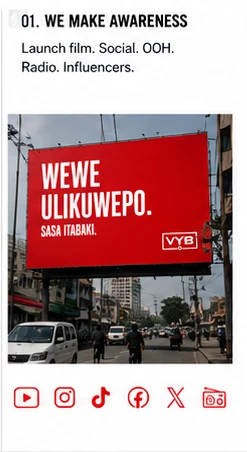
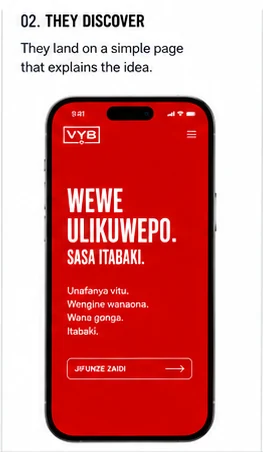
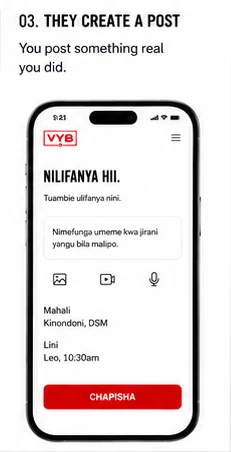
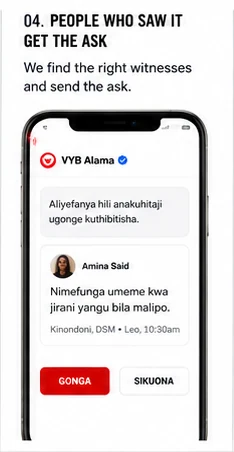
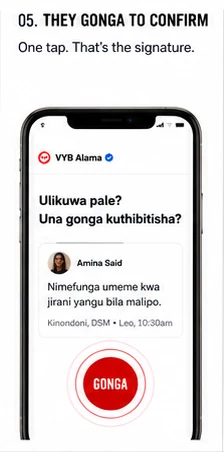
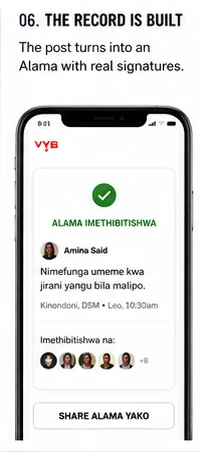
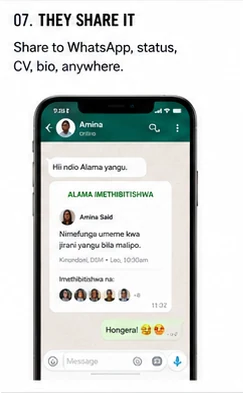
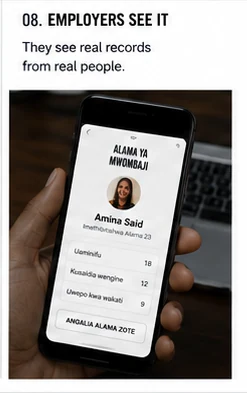
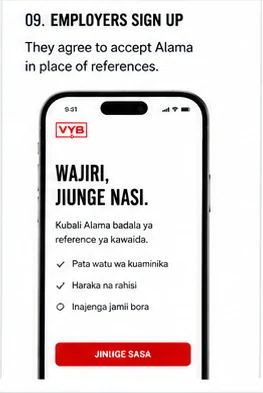
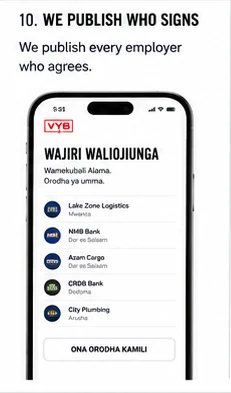
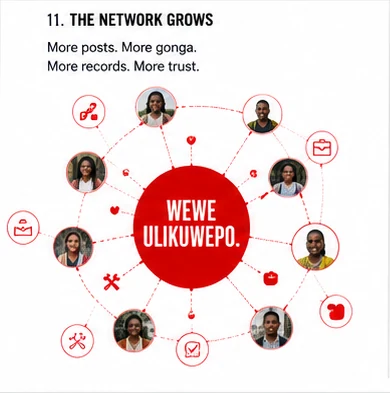
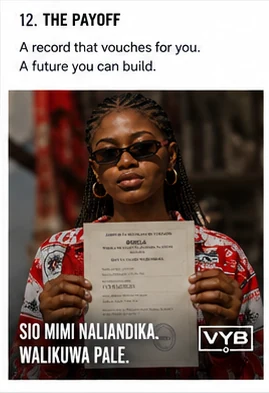

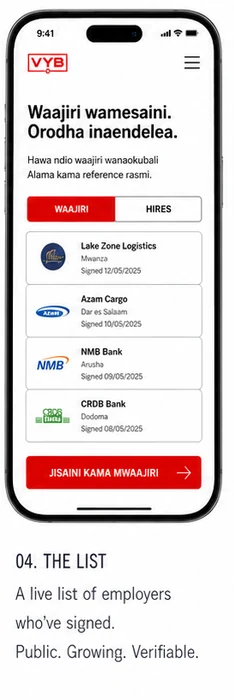
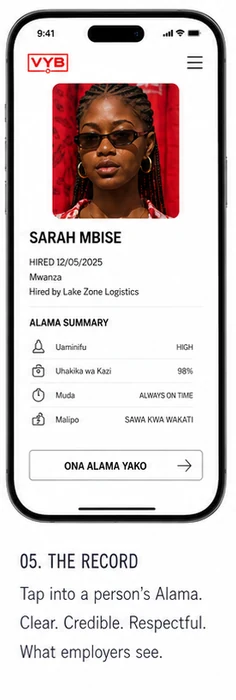
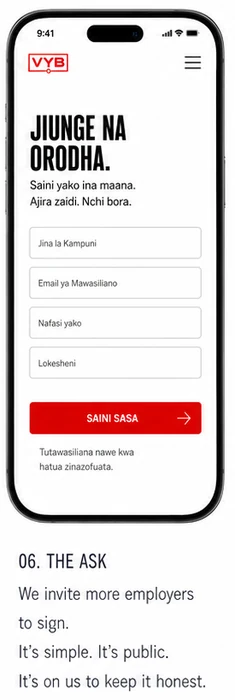
Vodacom signs employers who accept an Alama in place of a formal reference, and publishes the list. The first person hired on one is named, with their permission, and so is the employer.
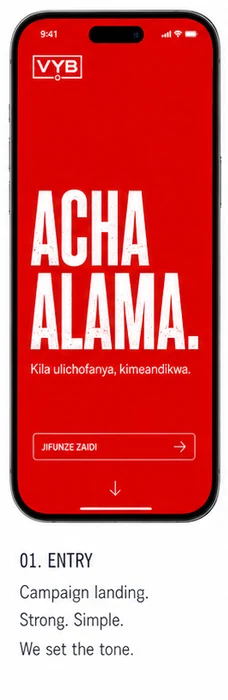
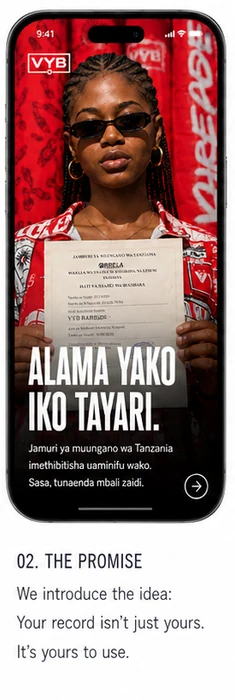
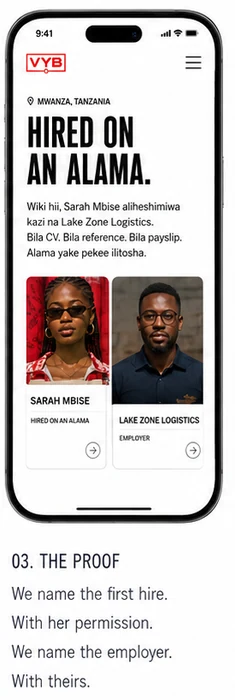
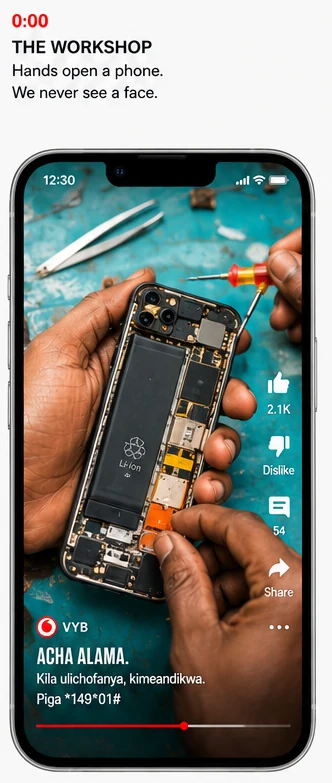
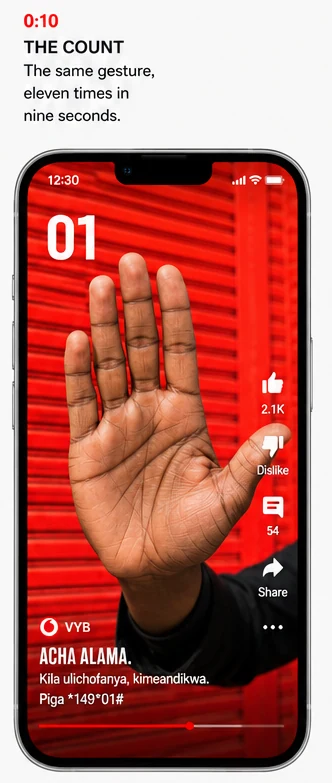
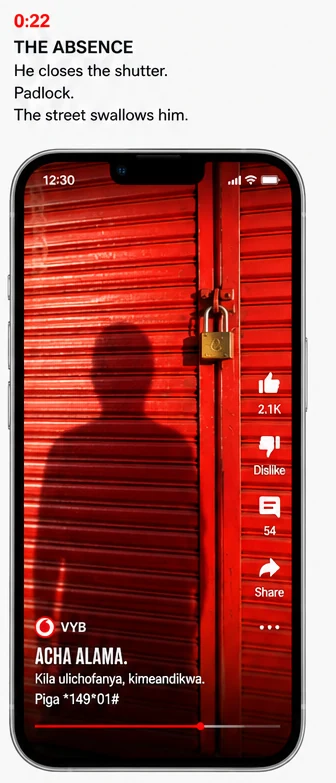
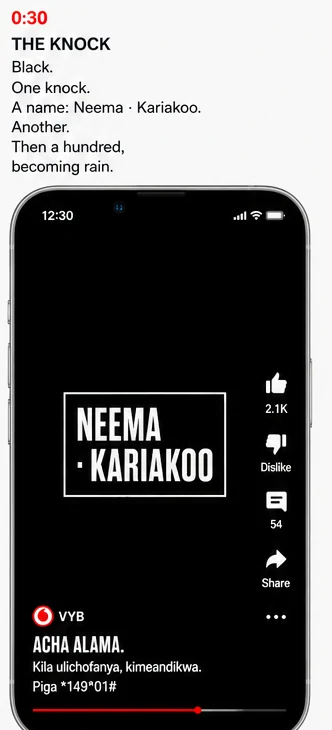
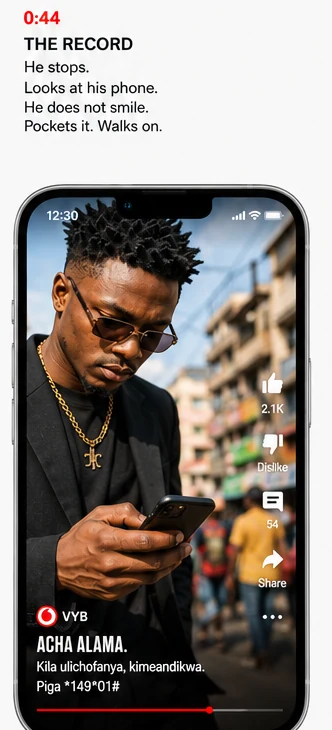
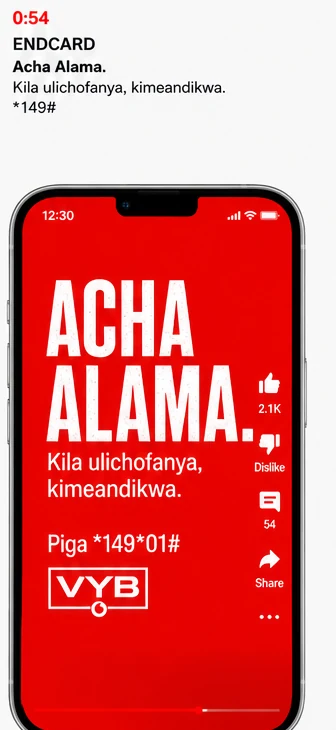
The only piece of this campaign you can already hear. Everything else on this page is written and timed; this one is recorded.
One voice. No music bed. Every number in it is real.
All the way to the end.
Thirteen million of you watched a film that runs sixty-eight minutes. Three of our ten sources run over an hour. You are not skimming, you are rationing.
“Nakupenda bravo, sijutii bando langu.”
I love you Bravo. I do not regret my bundle., a young Tanzanian auditing content against the cost of their data.

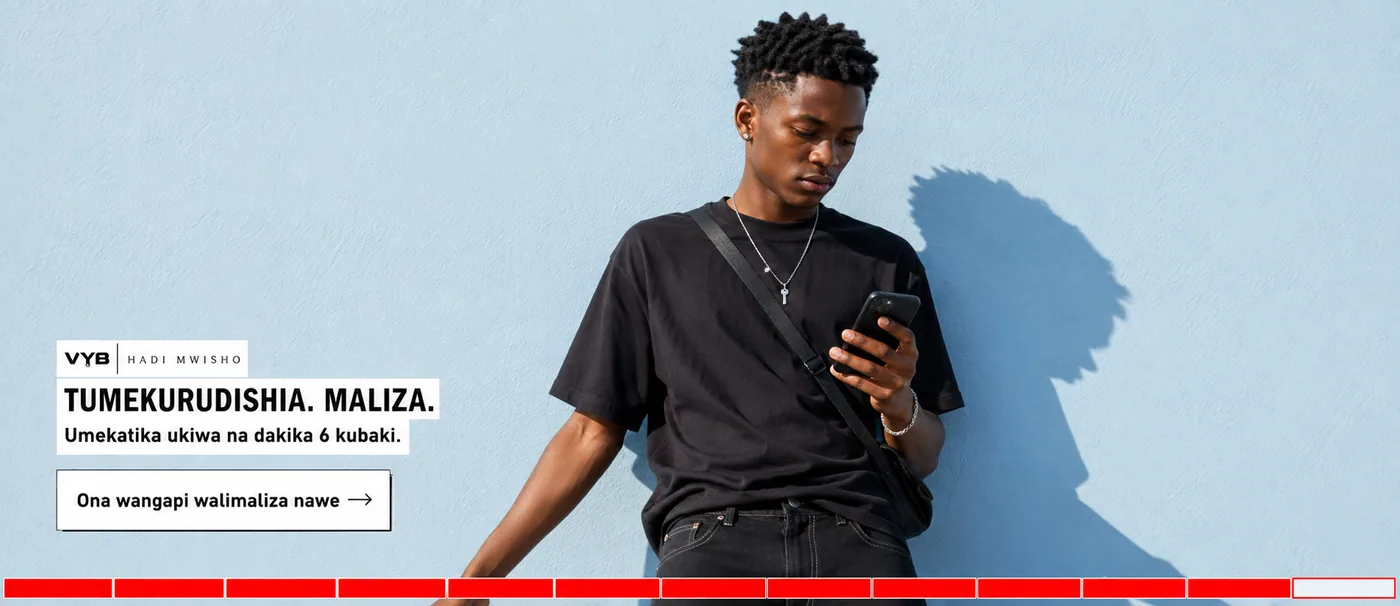
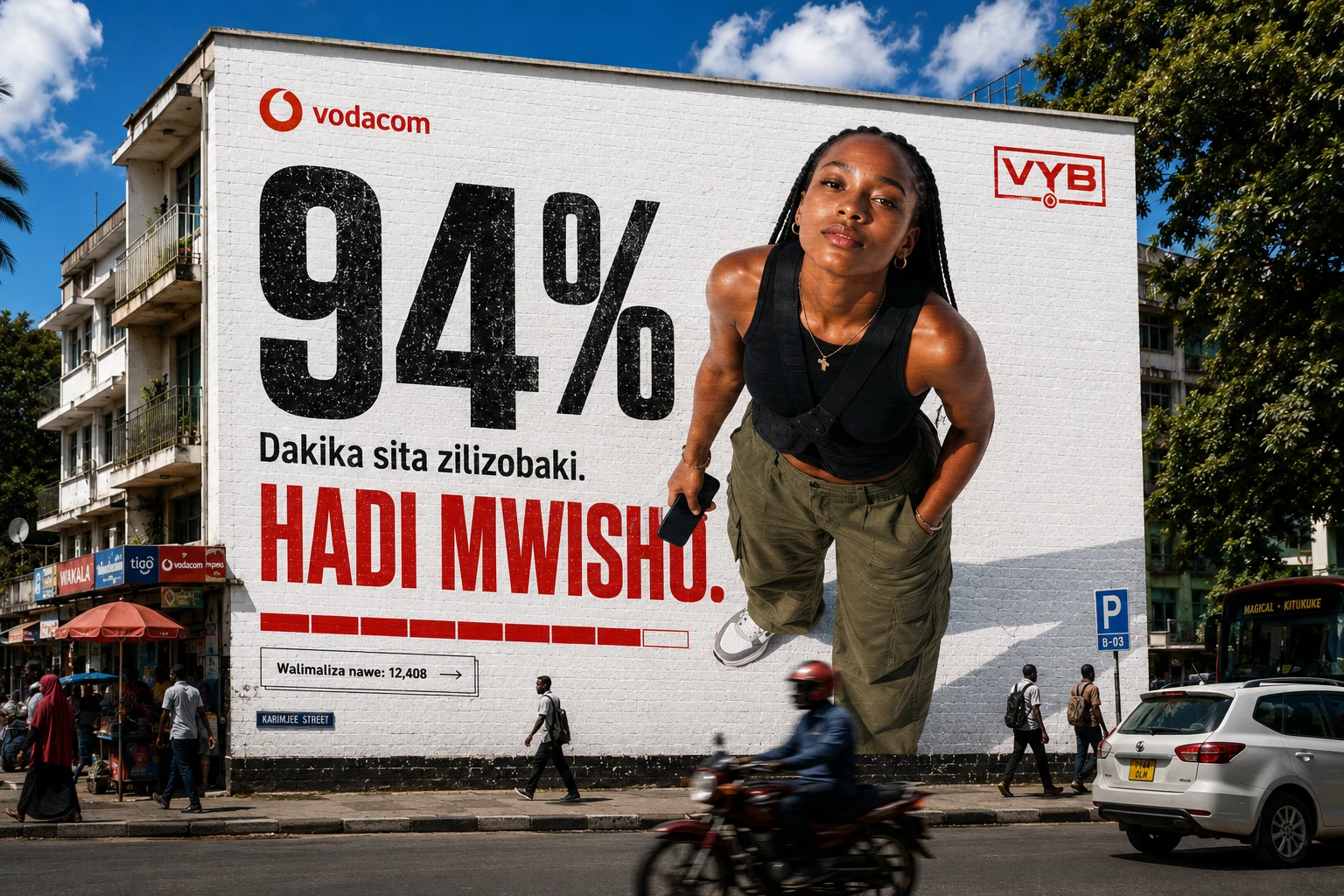
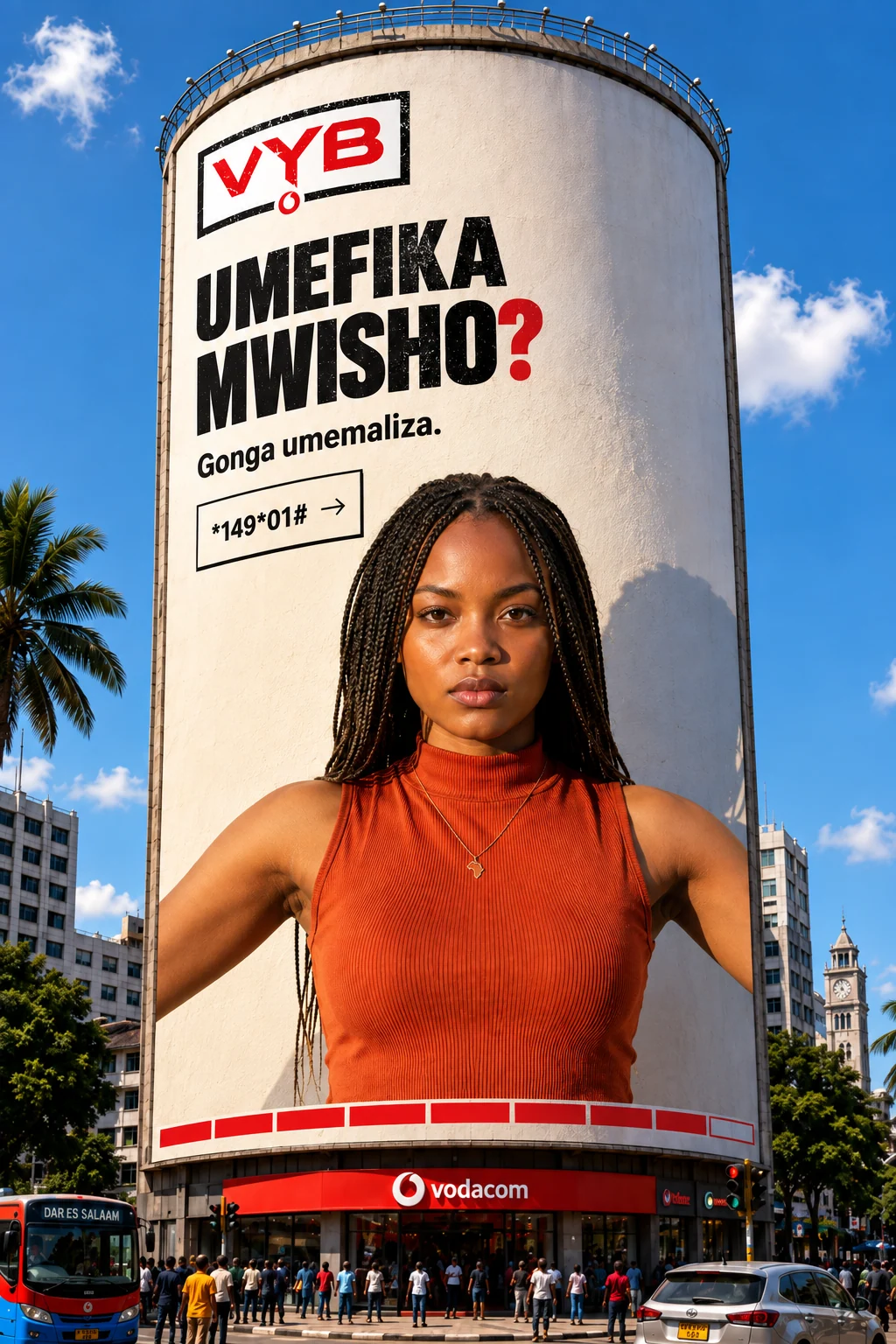

Not branded giveaways. A range in the campaign’s own language that a young Tanzanian would put on without being paid to. The test is whether it resells.
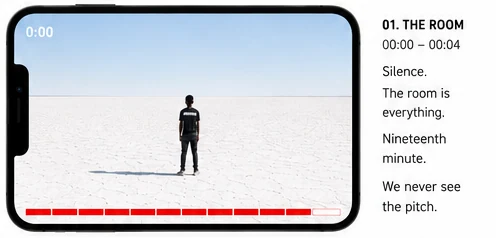
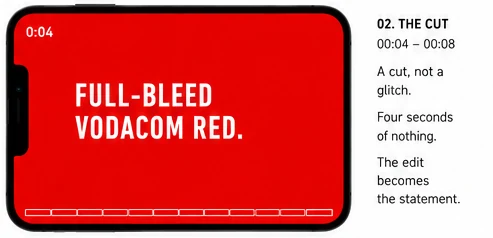
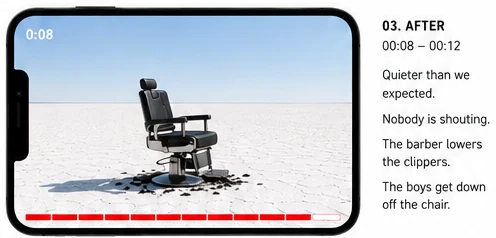
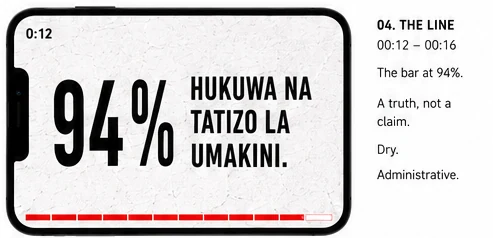
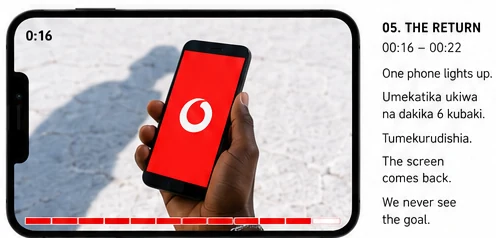
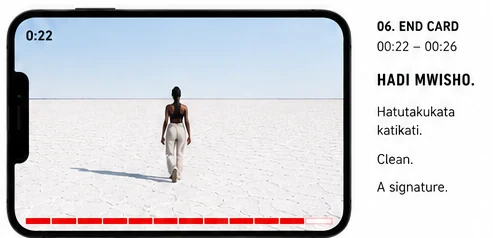
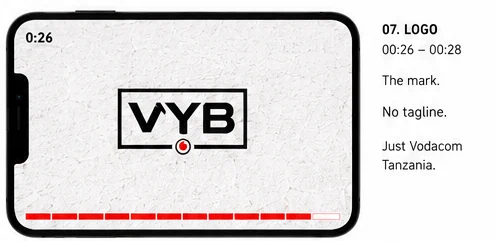
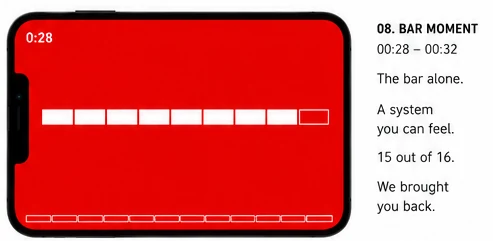
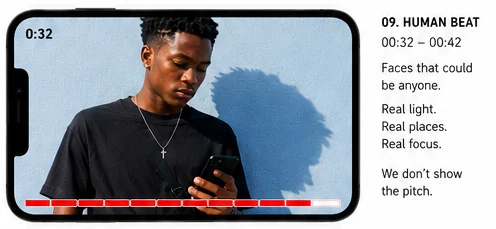
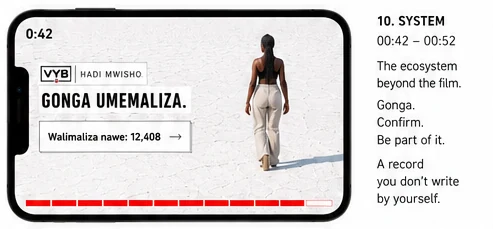
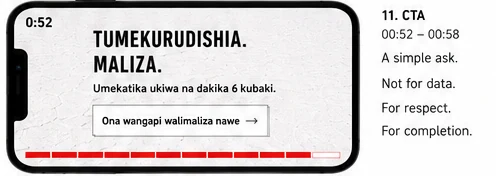
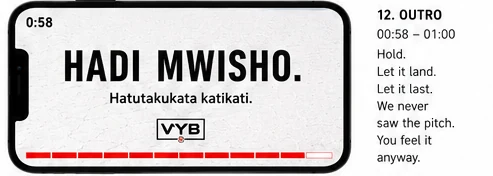
Written to be cut. The whole track exists so that stopping it at ninety four per cent means something.
The shorter cut. Same hook, tighter, and it reaches the line sooner.
A simulizi begins, and it is genuinely good. Then it is taken away from you mid-sentence, and nothing replaces it for four seconds. Sit through it.
You will be heard.
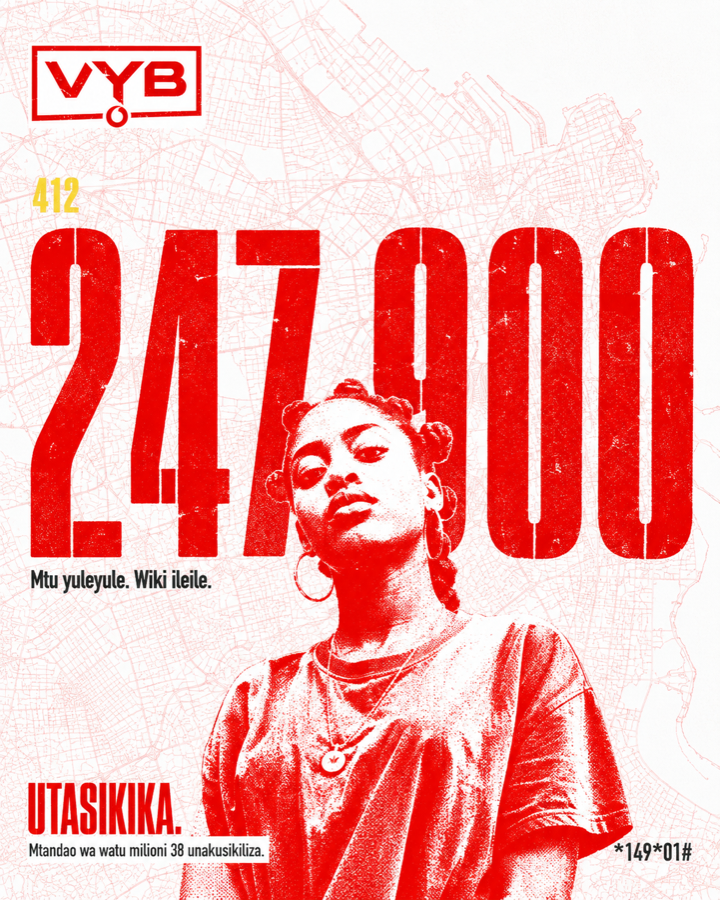
The next one you posted, two hundred and forty seven thousand. Same you. Same phone. Same followers. Same week.
“Sauti imekatikia njiani.”
The voice got cut off on the way., from the corpus.
This is not talent. It is a lottery, run by people who have never been to Tanzania. And Vodacom has thirty-eight million connections.
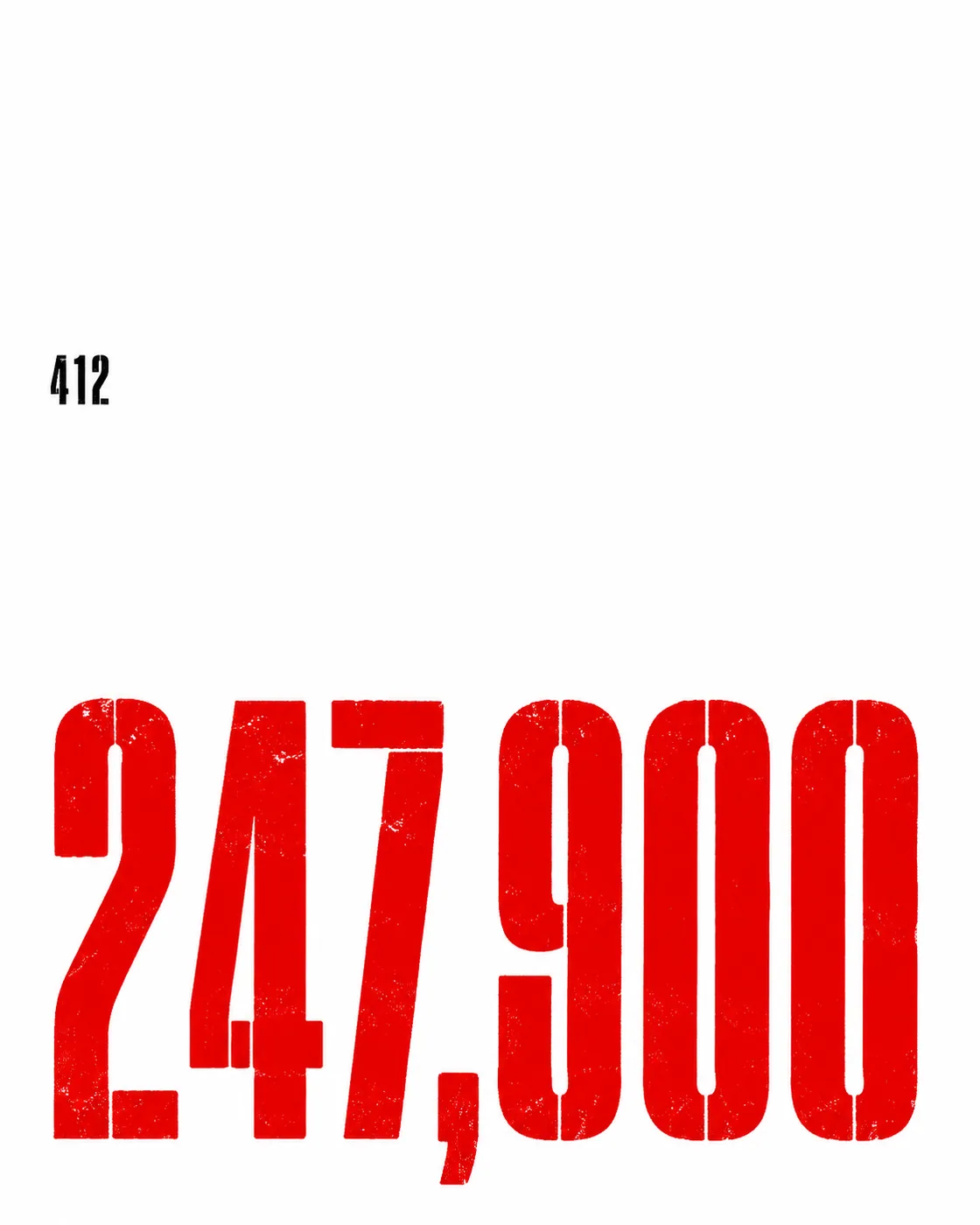
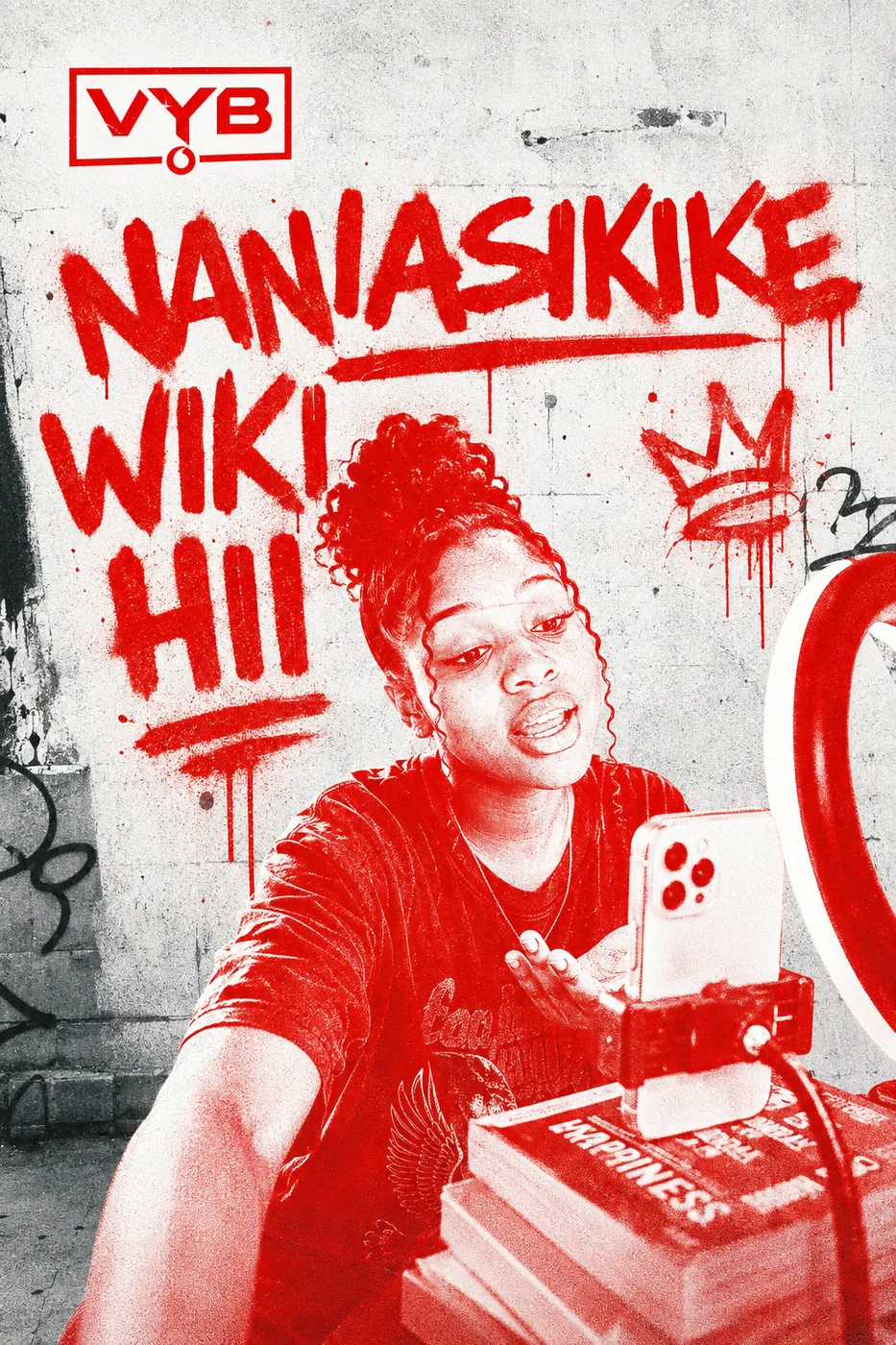
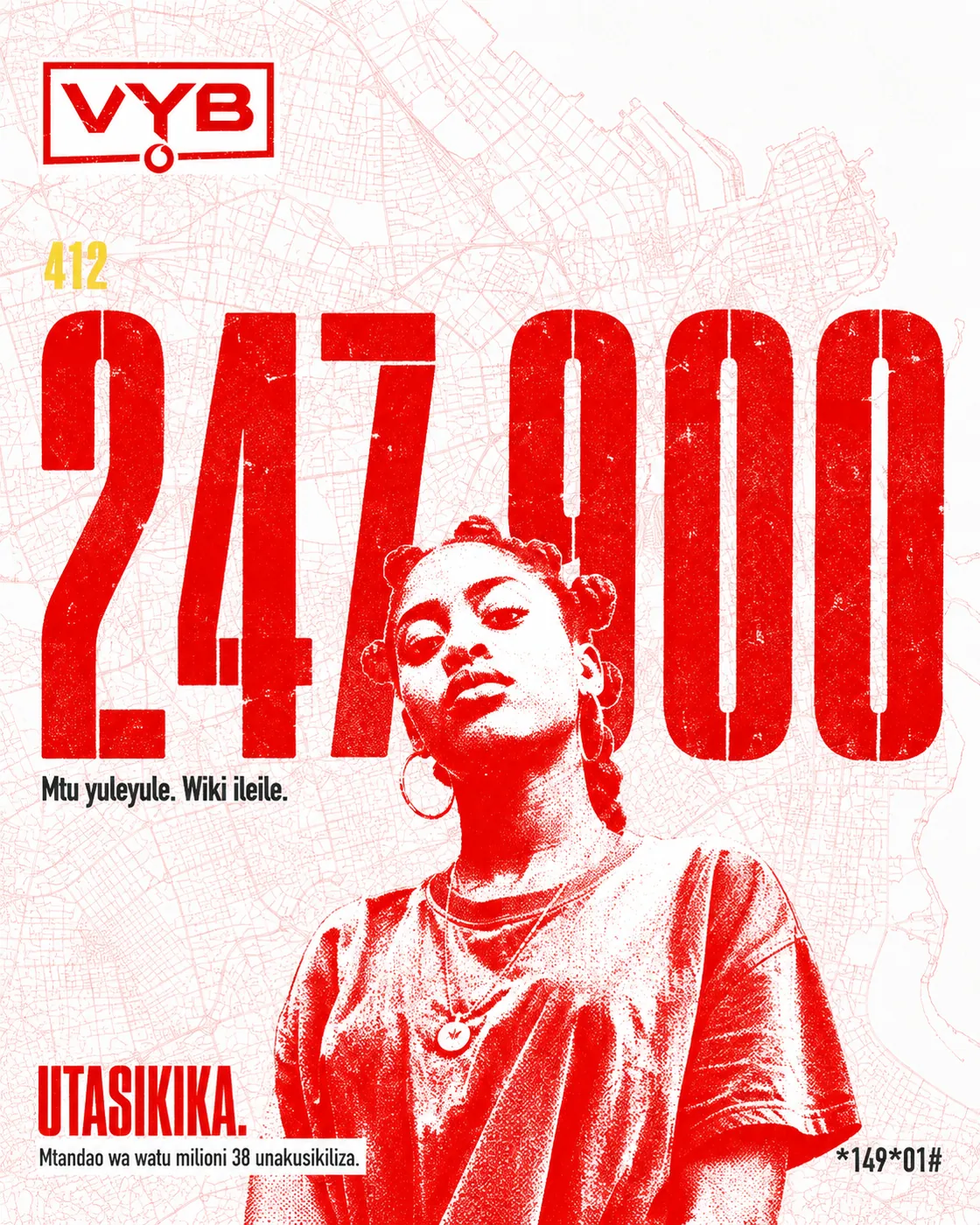

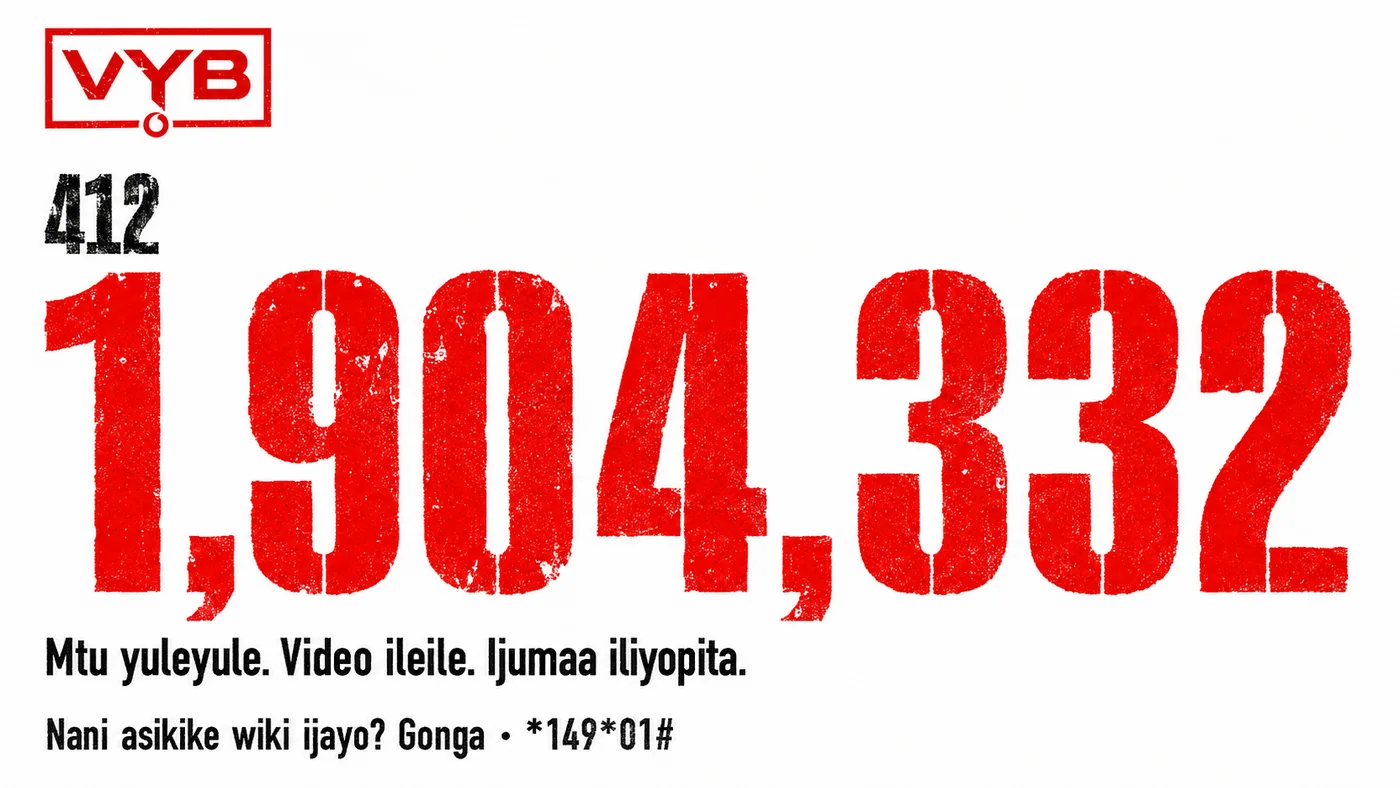
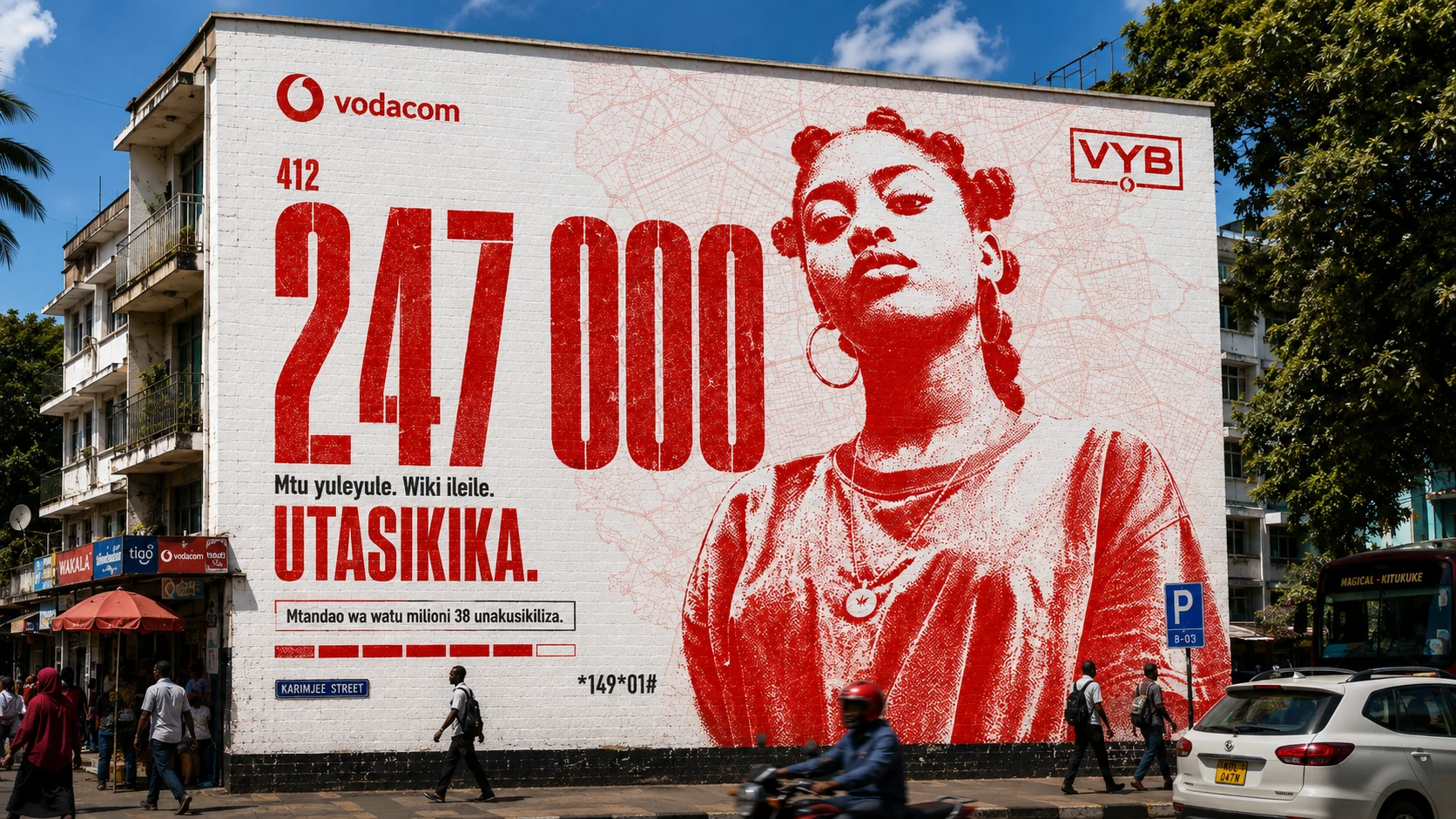
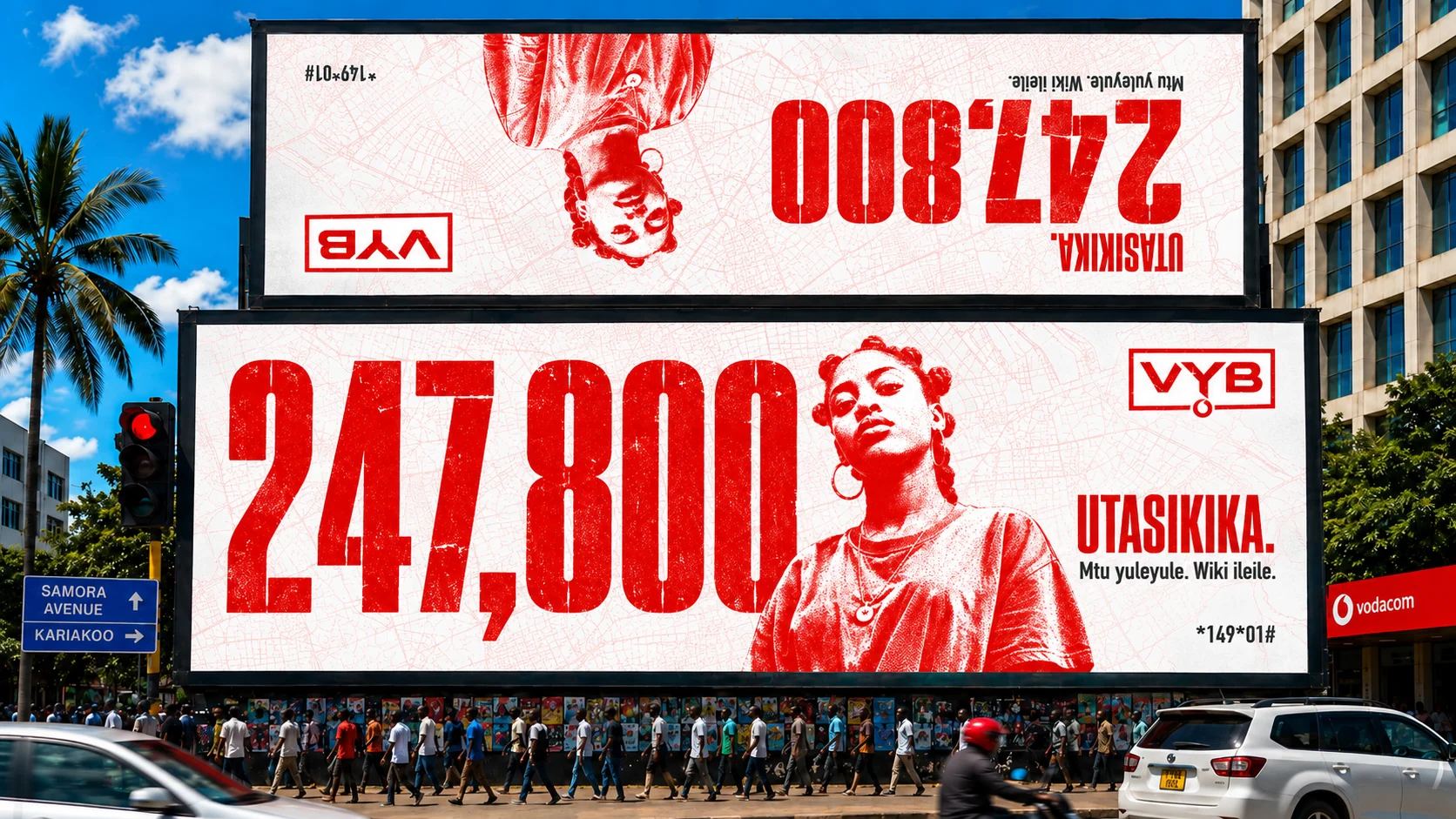

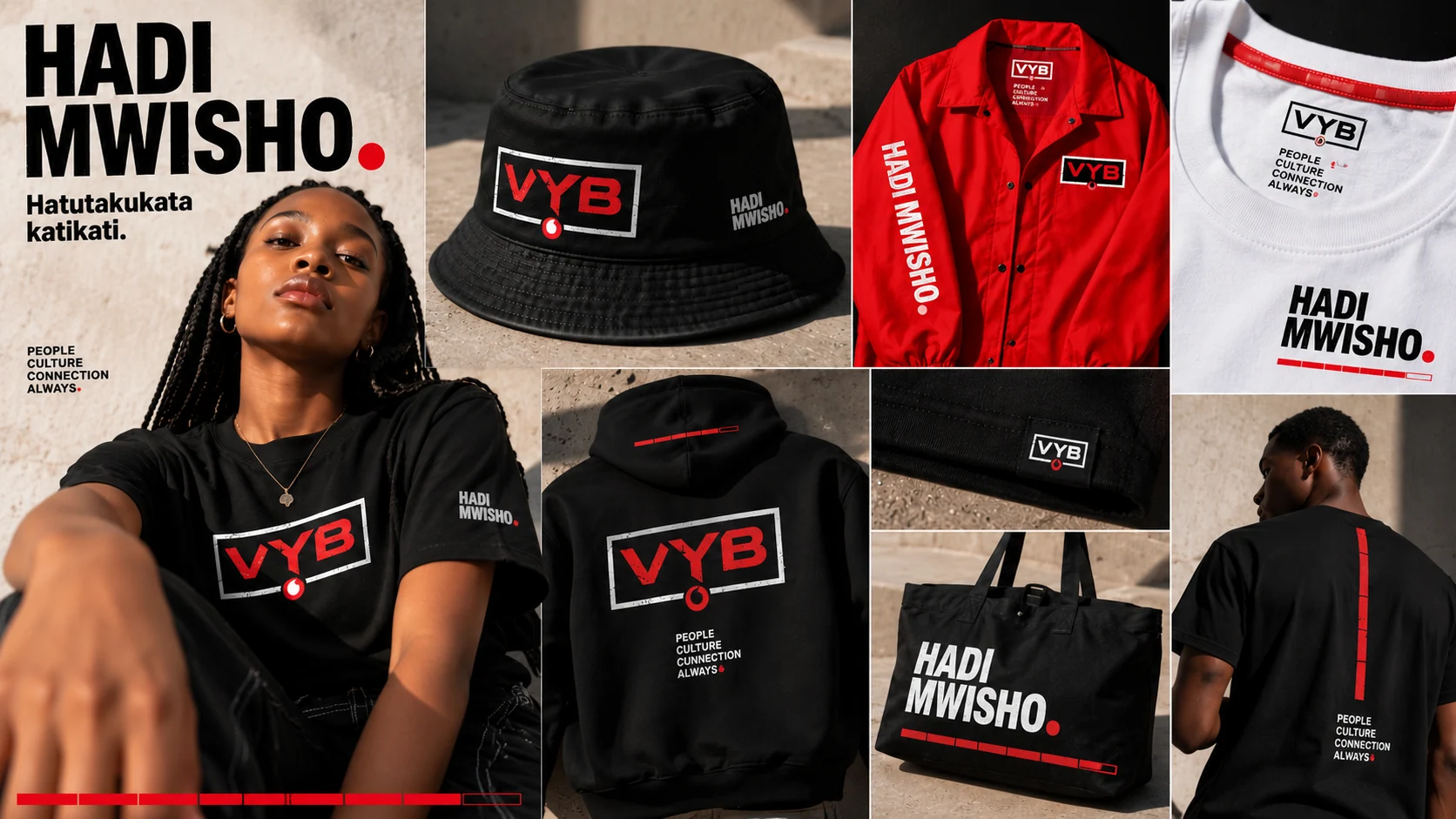
Not branded giveaways. A range in the campaign’s own language that a young Tanzanian would put on without being paid to. The test is whether it resells.


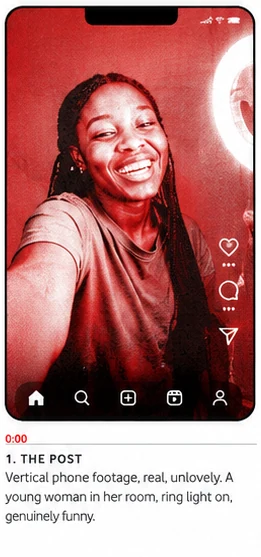
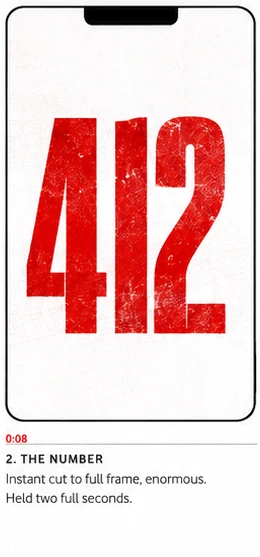
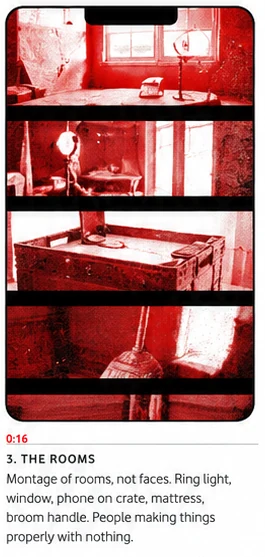
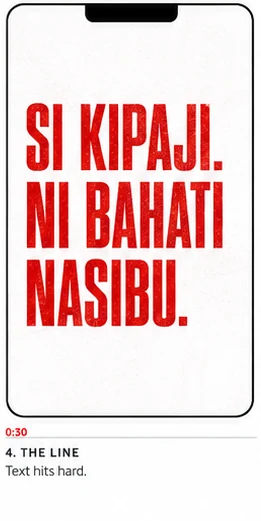
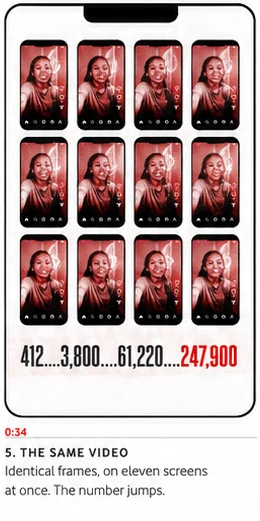
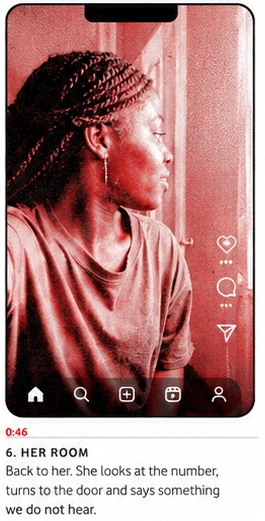
Built around the two numbers. The hook is the gap between them.
The alternative read. Slower in, and it lets the second number land on its own.
Ten seconds of a real creator mid-story. Good, funny, going somewhere. Then it stops.
And the campaign is the footage of the moment.
Reference only · not our work
Not a burst. A moment people can put in a calendar and count down to.
Something physical happens somewhere real. It is not on a screen first.
Not everyone gets it. That is what makes anyone want it.
Someone the culture already believes hands it over. The brand does not vouch for itself.
The thing happens. It gets filmed. Then the media buy amplifies the footage.
Airtel marked International Youth Day with a photograph of a signboard at head office. It reached 514 people.
Nane Nane, 8 August. Farmers' Day, a national holiday about work that gets done and rarely recorded. A hall in Kariakoo. One hundred young Tanzanians who work informally receive the first hundred Alama, printed and stamped and handed over. Numbered 001 to 100.
Beside each of them stands the employer who has agreed to accept it, signing on the day. The co-sign is not a celebrity, it is the institutions whose refusal to accept informal work is the actual problem, standing in a room agreeing to accept it.
Why it is unavoidable: a telecommunications company issued a hundred people their first official record of work, and employers agreed to accept it. That is a business-page story before it is a TVC.
A Simba versus Yanga derby, the most-watched thing in Tanzania that is not a funeral. In the last ten minutes, every Vodacom customer watching on data gets one message: your data will not run out before the final whistle. Finish it.
And it does not. Vodacom carries the whole country to the end of the game. One match only, then people ask when the next one is, which is the point. The co-sign is the commentators, live on air.
Why it is unavoidable: a network publicly guaranteeing it will not fail at the exact moment networks always fail. If it works the country notices. If it fails the country notices. Which is what makes it brave, and why nobody else will do it.
Every Friday, a creator nobody has heard of is given Vodacom's entire distribution for twenty-four hours. Then Vodacom publishes both numbers side by side, what they normally reach, and what they reached on Friday.
One person a week. Fifty-two a year. You cannot buy it and you cannot apply for it: you are nominated by other people. And the biggest artists nominate rather than appear, worth more than fronting an advert, at a fraction of the cost.
Why it is unavoidable: a telco out-reached a global platform inside Tanzania and published the receipt.
In all three the film exists because the thing happened, the only order that produces footage worth watching, and the only order Adidas has ever used. All three are also cheaper than the TVC that would otherwise open the campaign. That is not a coincidence.
Open it. Knock. The count moves. It works on a feature phone through *149#, because internet penetration in Tanzania is 29.1 per cent and an app-only youth platform is a Nairobi answer to a Tanzanian question.
Tap Nipo. The count is live and national.
The count becomes a room, the thing a comment section cannot do.
The room can changa, on M-Pesa. Observed behaviour, not a hopeful feature.
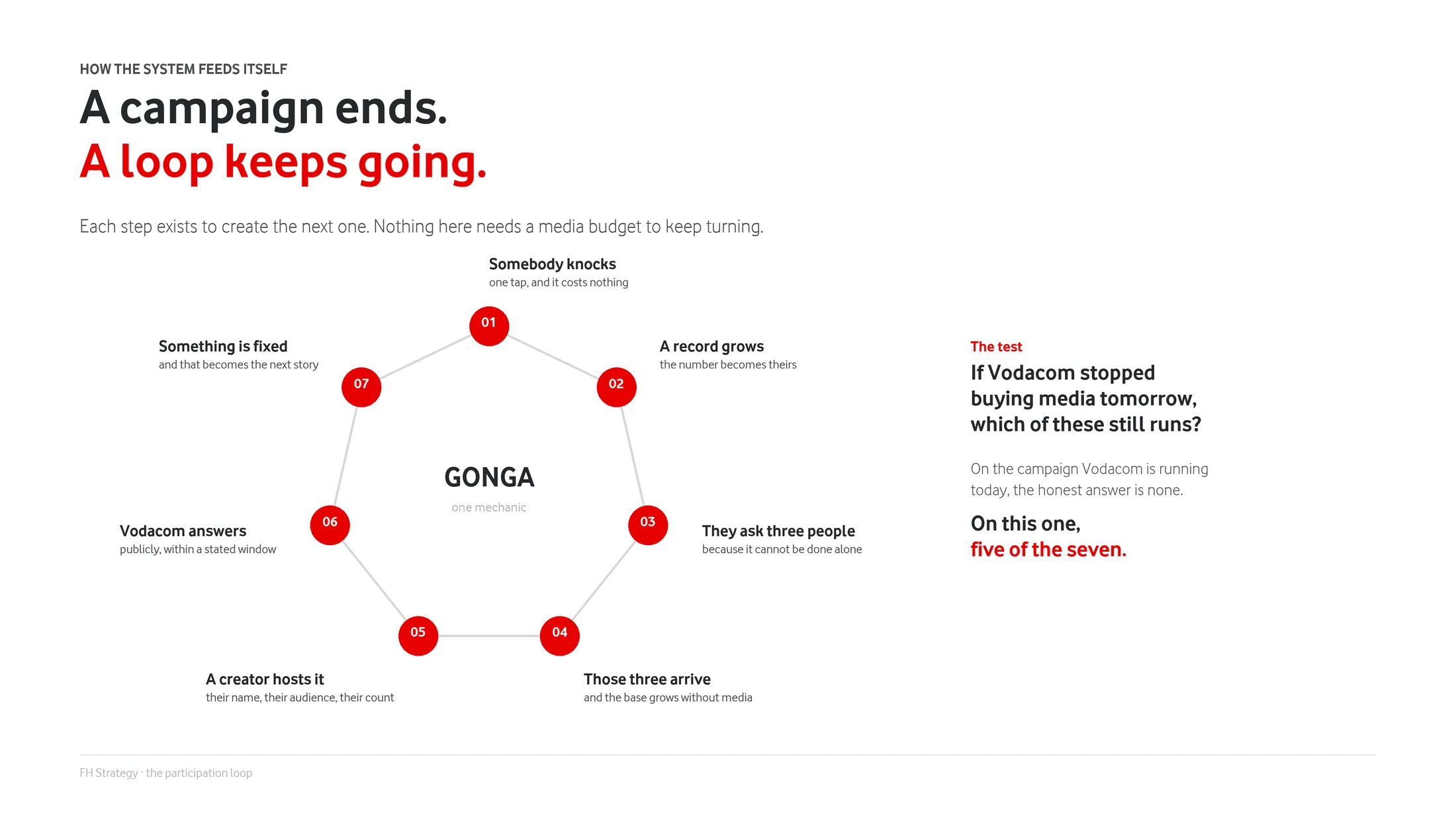
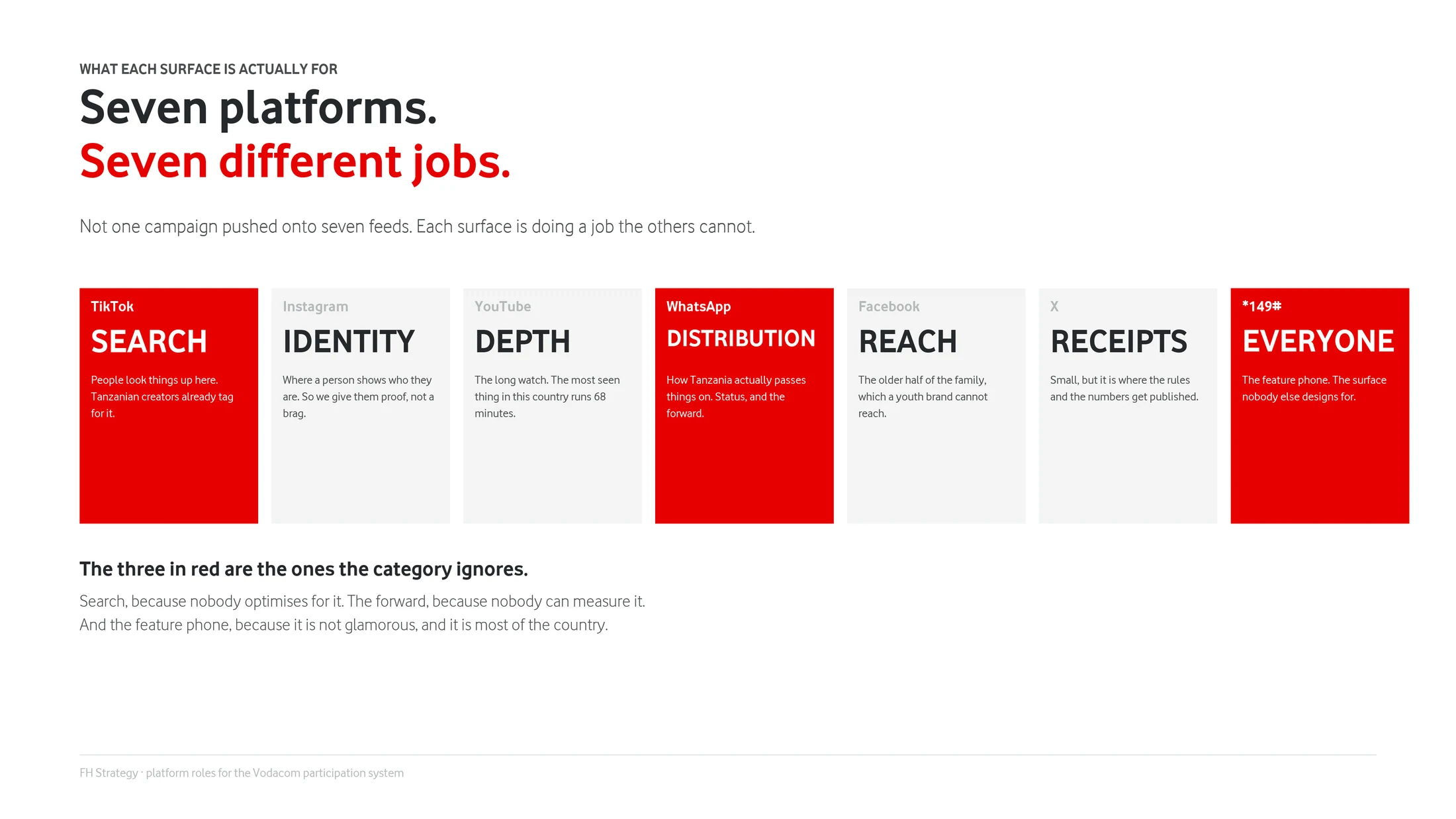
Not a channel plan. A loop where each step creates the next, one mechanic underneath all of it, and a job for every surface that the others cannot do. Click any of these to open it full size.
Three scenarios, assumptions stated and shown as a range. Even the weakest case reaches more people in year one than VYB has in twenty-two months, and it asks nobody to join.
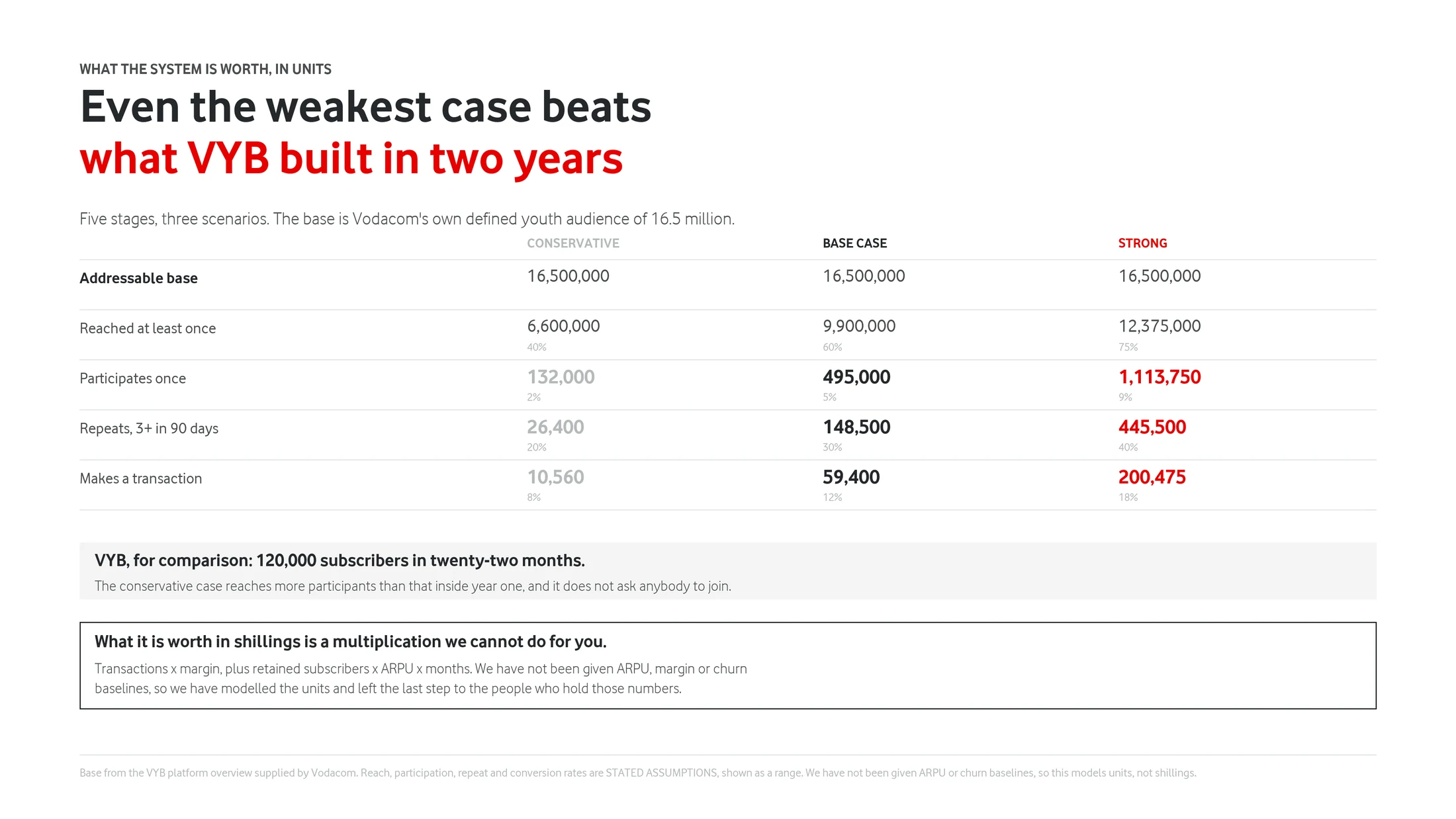
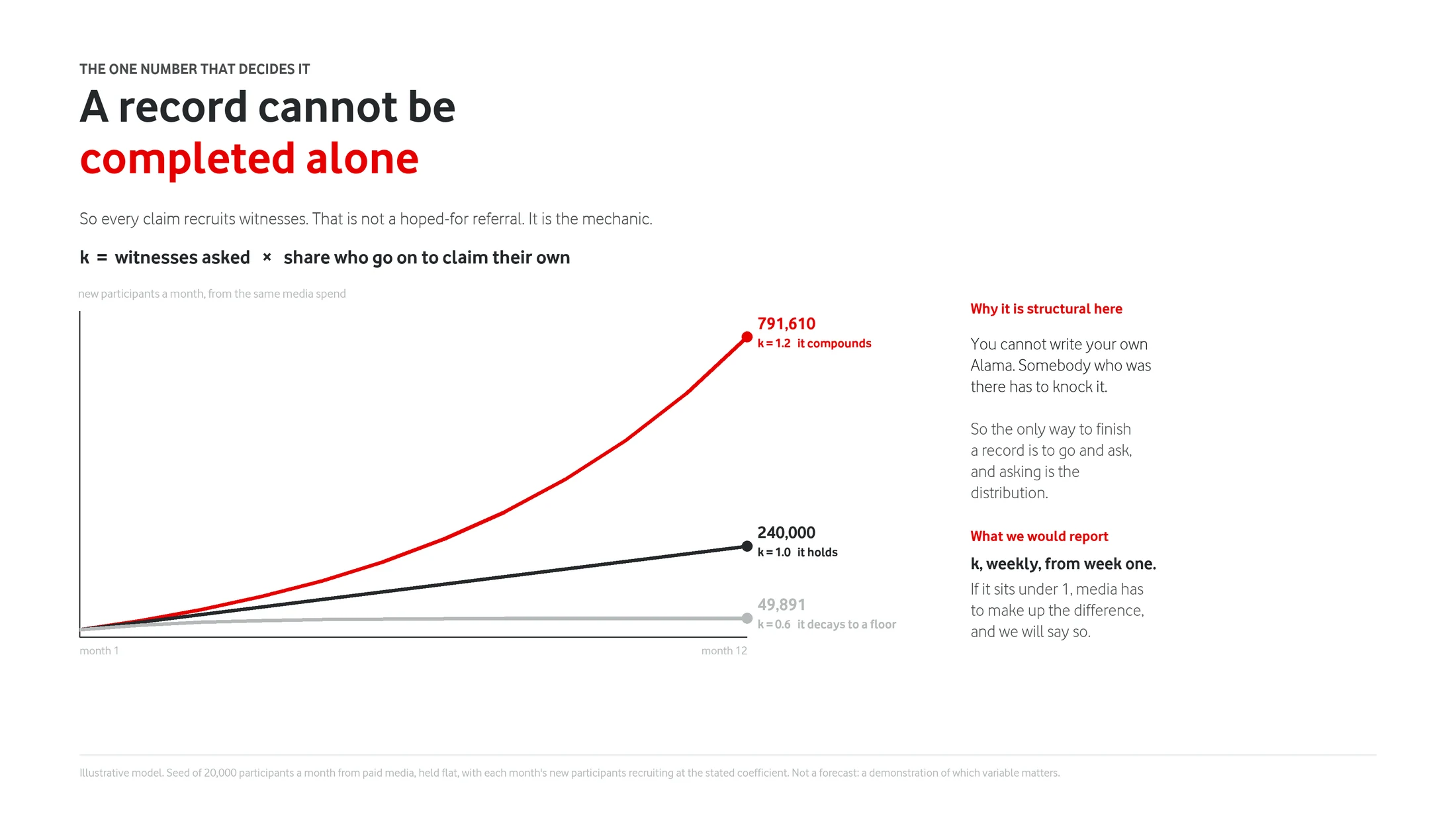
Every one of these carries a failure condition too. Participation under 132,000. k under 1 and falling. Records with zero knocks. Participation rising while transactions stay flat. We would report k weekly from week one, because it is the only number that tells you whether you are building a system or renting an audience.
It needs to stop asking people to join. VYB is opt-in by design: you dial *149*01# and choose option 1, you register biometrically, or a Vyber invites you. That is a deliberate choice and a defensible one, but it means 99.3 per cent of the audience VYB was built for has been asked, and has not joined, in a market running at 159.8 per cent multi-SIM penetration. And we could not find a VYB presence on TikTok at all.
Our recommendation: repositioned from a membership into a reward layer. Today you must join before anything is yours. We propose that nobody would need to join, anybody could act, and the action would unlock what VYB already holds. Deliberately not rebuilt as a new sub-brand, because a sub-brand is a line item, and line items get cut.
The same sixteen and a half million people, twice. The only difference is where we put the door.
Plus 7.3 million audience reach at +80% against target, and 91.3% digital reach. Communication was one of five transformation pillars, not the strategy.
Show them they were here. Let them finish. Make sure they are heard.

It works from a shared screen. Point a phone camera at it, enter a name, and it opens a personalised summary of everything you have just seen, ending where this started. Nothing to install, nothing to log into.
Or open it here